Doublewood at the Harbour
Cask & Maturation
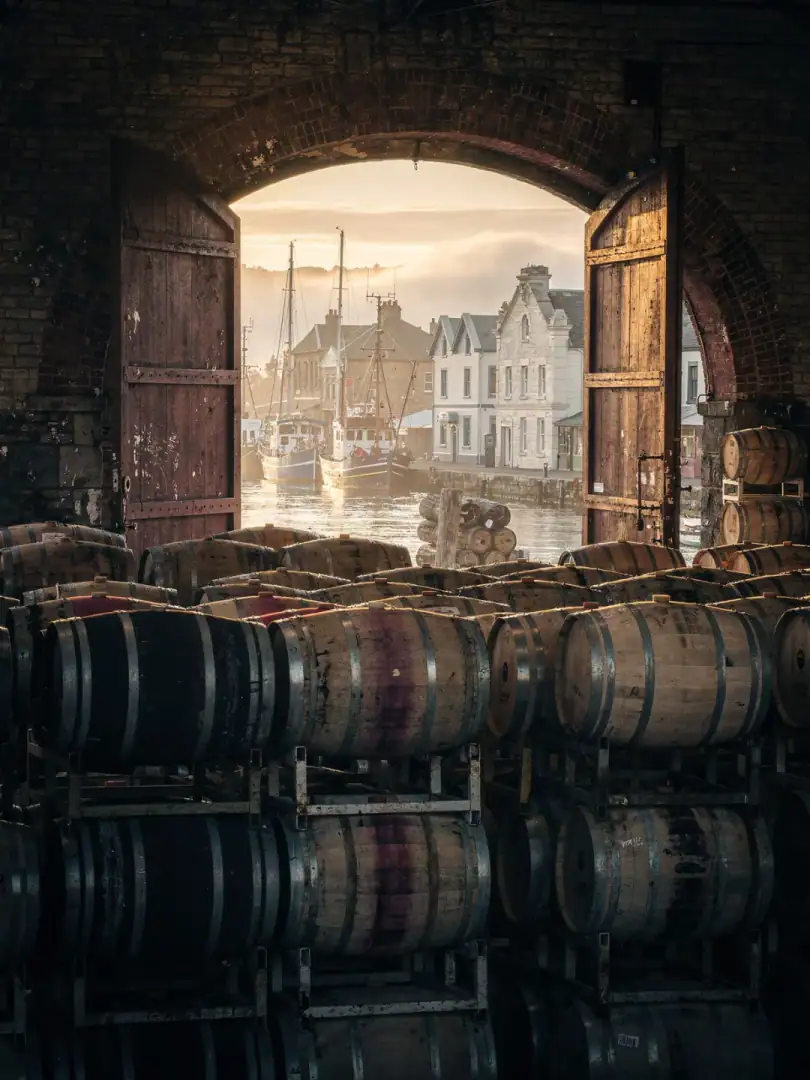
When Willowbank closed in 1997, hundreds of casks were left behind. They were made of American bourbon oak and filled to the brim with malt and grain whisky. Suddenly no one was responsible for them anymore. They simply kept maturing for years, until winemakers Warren and Deb Preston bought the stock. They brought the casks to the historic harbour district of Oamaru, where the old grain warehouses still stand today.
There, they developed a process that has since shaped many New Zealand bottlings. After six years in American bourbon oak, the whisky is transferred into French wine casks. There it matures for another twelve years. This double maturation gave the first major bottling its name: Dunedin Doublewood.
The warehouses themselves stand in old Victorian grain stores by the harbour of Oamaru. Their doors stay open enough for the sea air to pass through freely. Cardrona, by contrast, matures its whisky in the middle of Central Otago. There, the temperature swings between summer and winter, day and night, are much greater. This makes the cask work harder than it does by the mild sea.
The distilleries publish little about the exact angel's share of New Zealand casks. The big Scottish houses have decades of statistics on this: an average annual loss of around two percent is considered the benchmark there, while in warmer, drier climates the evaporation is usually noticeably higher. A New Zealand equivalent to this statistic doesn't yet exist. What's certain is that each climate takes something from the cask in its own way. That's true both at the humid harbour of Oamaru and in the dry, continental interior of Central Otago, where Cardrona matures its casks.