Moss Instead of Heather
Malt & Peat
Peat is the exception in New Zealand, not the rule. Most distilleries malt their barley unpeated. Anyone wanting smoke instead sources peated malt from Gladfield Malting in Dunsandel. It's the only maltings in the country offering this on a large scale. Its peat comes from bogs on the edge of the Canterbury Plains.
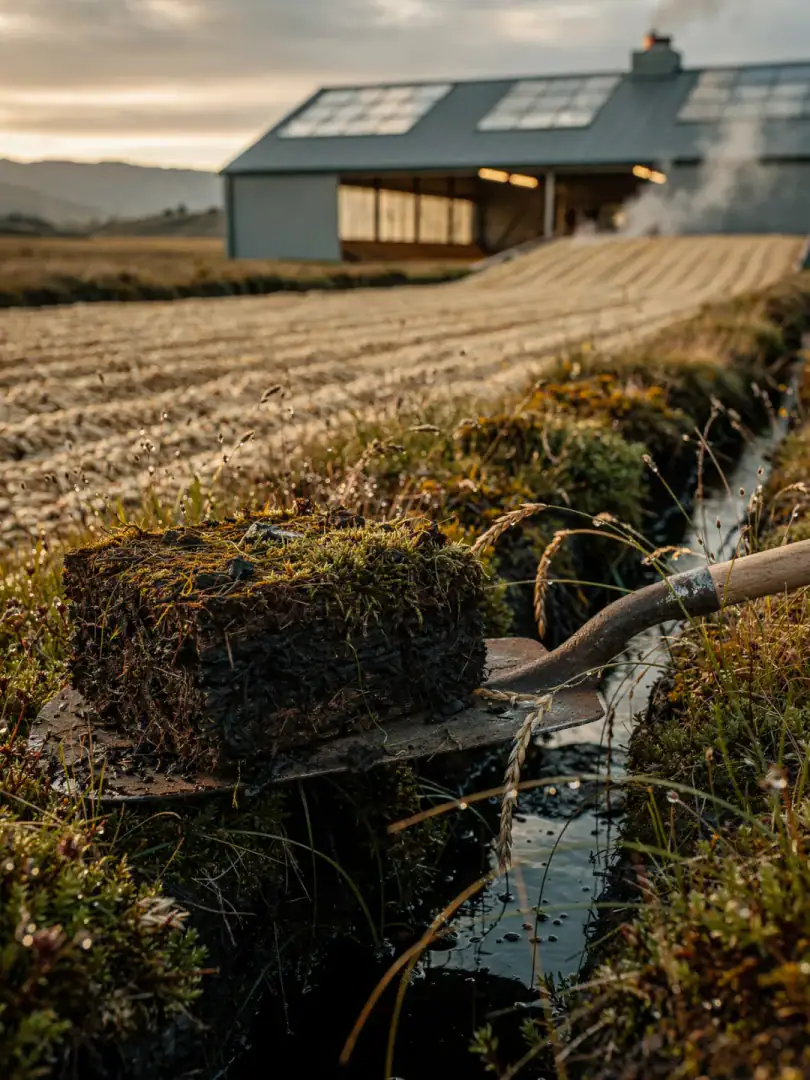
The bog this peat comes from differs greatly from the peat bogs of Islay. Instead of heather and rotted wood, it's mainly sphagnum peat moss that grows here, along with sedges and flax. These plants contain no resinous lignin, and that's exactly what gives Scottish peat smoke its medicinal character. That particular note is missing from New Zealand peat, since there's no forest nearby to provide it.
You can taste this in the glass. South Island Peat from Thomson Distillery near Auckland comes across as earthy and mossy rather than smoky and iodine-like. Matt Thomson pushed the experimentation even further: as early as 2005, he tested at home how manuka wood smoke worked on malted barley, before finally settling on the peated malt from the south. Even so, only a handful of houses today offer a peated whisky at all.
On Islay, peat cutting has been part of the landscape for centuries. In New Zealand, malting with smoke is instead a deliberate stylistic choice made by individual distilleries, not a historical necessity. Most houses in the country still produce their whisky entirely without peat. For them, the sweetness of the Canterbury Plains matters more than the smoke of the bog.
Young, barely decomposed peat moss, saturated with water.
The root: This young moss burns bright and fast, and its smoke stays mild.