Fast Maturation
Cask & Maturation
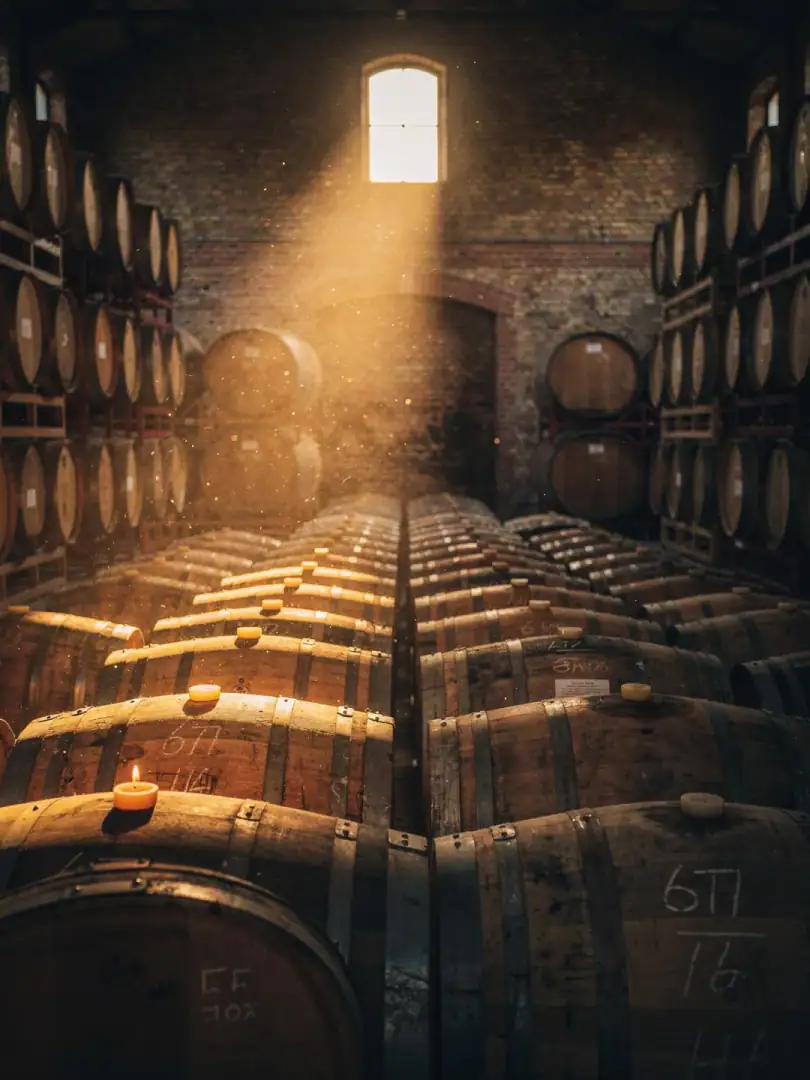
Over a thousand casks rest at Zuidam in Baarle-Nassau. New American oak stands alongside used bourbon barrels, plus Oloroso and Pedro Ximénez sherry casks, Tawny Port, Palo Cortado, and even Rivesaltes from southern France. Each cask type leaves a different signature on the finished whisky, from bright vanilla to dark dried fruit.
The 100 Rye matures entirely in new American oak, for one hundred months, just over eight years. Fresh wood releases vanilla, coconut, and spice notes faster than a cask that's already been used before. For such a short maturation period by whisky standards, this is a deliberate trick to still achieve depth.
Those eight years behave differently in the Netherlands than elsewhere. The mild, damp coastal climate makes the whisky interact with the wood faster than Scotland's cooler climate does. The annual angel's share – the portion that simply evaporates in the warehouse – runs at four to six percent for Millstone. In Scotland, the average is only around two.
That costs volume, but it buys speed: what takes twelve years or more in Scotland can taste similarly mature after just eight in Baarle-Nassau. In the end, the 100 Rye is bottled at one hundred US proof, fifty percent ABV, undiluted enough that the cask still comes through clearly.
A warehouse in Brabant, then, is more than shelves full of casks – it has a tempo of its own. Taste in early, and you often get what other regions make you wait twice as long for.