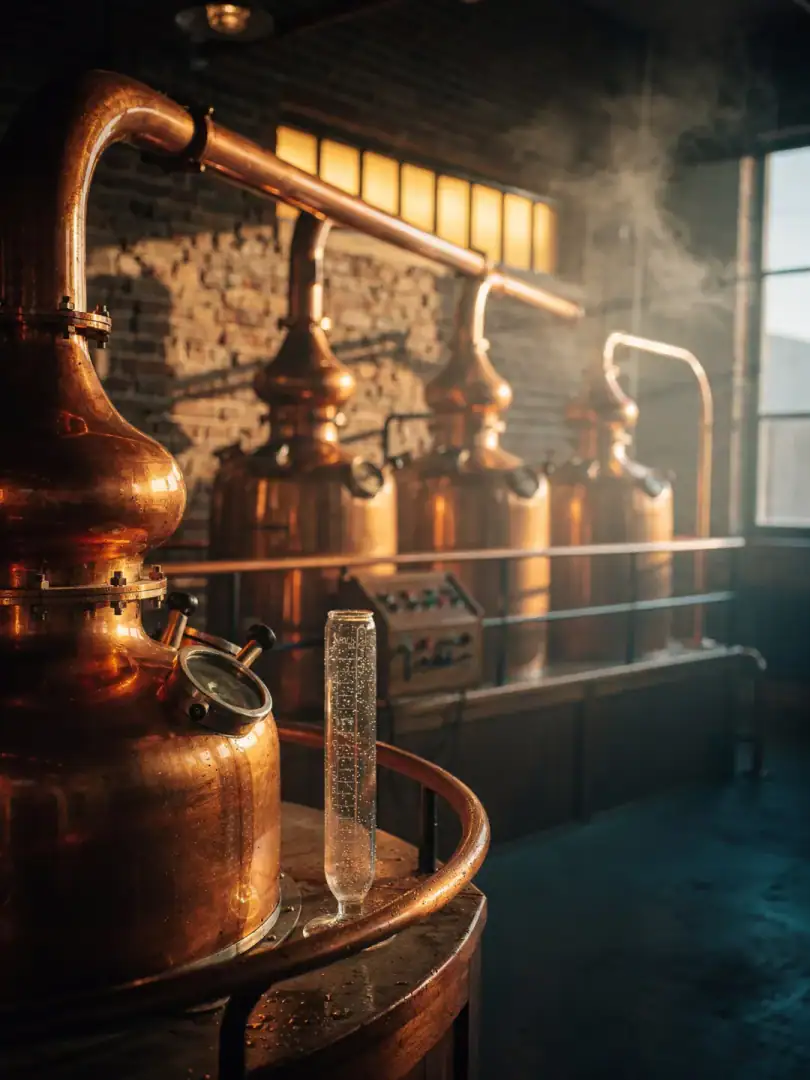
Four Copper Stills
Distillation
In 1975, a single copper pot still stood in Baarle-Nassau – no more distillery was needed to get started. Today there are four, all copper, all still hand-operated, spread across a 3,600-square-meter hall where Millstone whisky is also made. It's the volume that's grown, not the technology.
At Zuidam, almost everything runs through these same small stills: genever, gin, and of course whisky too. This sets the distillery apart from larger operations that build a separate setup for each product. Small copper stills distill more slowly than large ones, but they preserve more of the grain's aroma in the distillate.
Every run is cut in stages: the first, sharp run – the foreshots – is drawn off, then comes the heart, which later goes into the cask, and finally the heavy feints. How tightly this cut is made helps determine sweetness and bite in the finished whisky. None of it runs automatically; the distiller tastes and smells at every step.
The 100 Rye, made from a mash of pure rye, runs entirely through pot distillation in the small copper stills, with no detour through a column still, even though EU law would even permit this for Dutch single malt. Zuidam deliberately forgoes this shortcut.
Four stills for an entire range also means that often only a few hours pass between two runs before the next mash goes into the same still. The operation stays small enough that a single distiller can keep track of what's currently in which still.