Spicy instead of smoky
Tasting
You might expect smoke on the first sip, but you won't get it right away. The rye that gives the whisky its name brings notes of pepper, caraway, and fresh rye bread to the glass first, something you won't find in barley whiskies. Only the Dark Rye Malt Peated actually brings smoke, and it smells more of coniferous forest than of the sea.
The Original Rye Whisky J.H., the distillery's core bottling, shows this rye profile most clearly. It presents as spicy and peppery on the nose, with vanilla and a light sweetness from the Manhartsberg oak cask on the palate. The finish is dry and long, recalling the crust of rye bread. It's a whisky that doesn't hide behind sweetness.
The Dark Rye Malt Peated, on the other hand, is made from 100 percent dark-roasted, peated rye malt and tastes correspondingly different. A resinous, smoky roast note appears, reminiscent of dark bread or gingerbread, alongside the earthy peat tone of the local coniferous forests. At 46 percent alcohol, it feels stronger and denser than the core bottling.
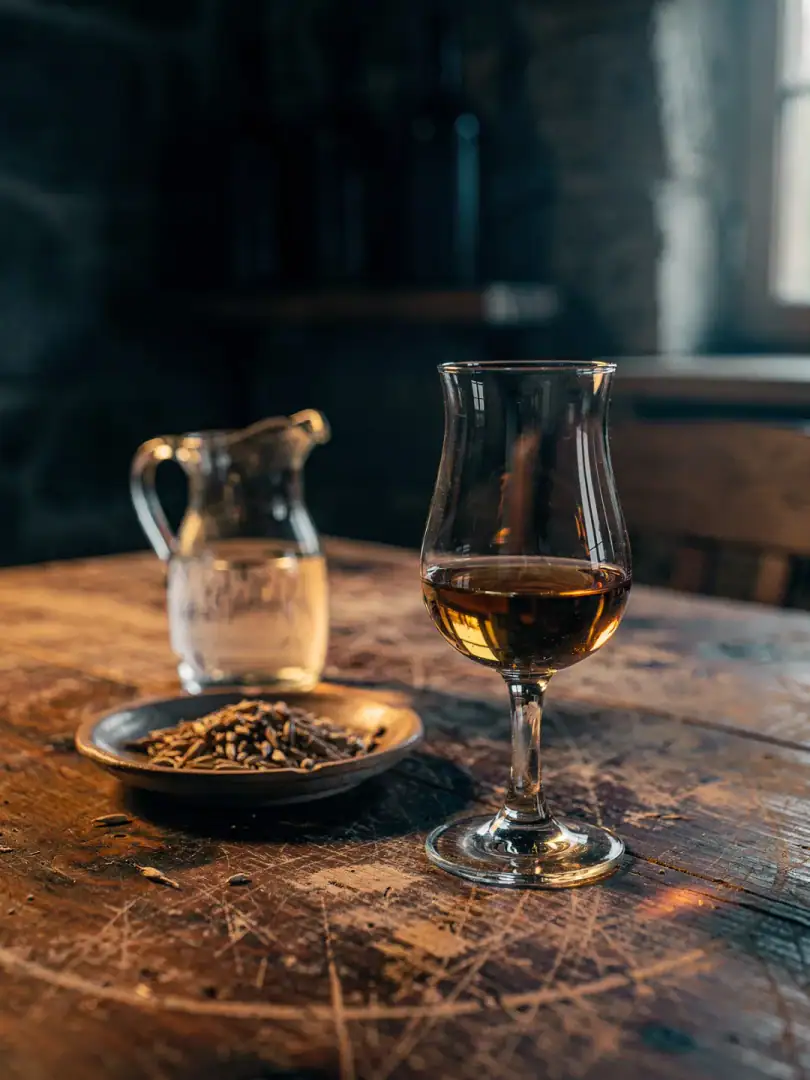
A simple tulip-shaped nosing glass, tapering toward the top, is enough for tasting – it concentrates the aromas instead of scattering them. A first sip without water reveals the pure power of the rye. A few drops of still water then open up the nose further. They're especially useful for the Dark Rye Malt Peated, revealing details the alcohol had previously masked.
It's best to let both Roggenreith bottlings compete one after another in the same glass: first the mild Original Rye, then the peated Dark Rye. This shows how far a single grain, rye, can diverge purely through malting and roasting.