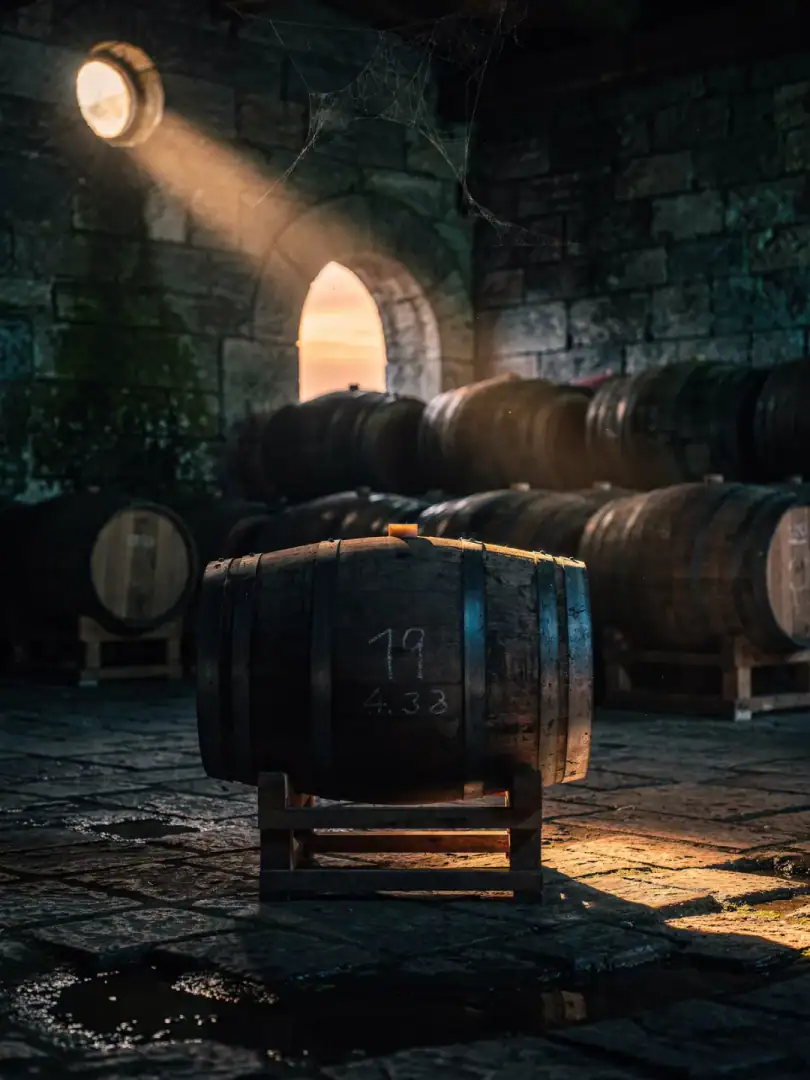
Manhartsberg oak matures
Cask & Maturation
What becomes of the clear new-make spirit is decided in the cask. The Original Rye Whisky J.H. spends six to eight years there on average, depending on the cask wood and the climate in the warehouse.
The standard cask is made from Manhartsberg oak, a common oak from the Manhartsberg, the eastern foothills of the Waldviertel. Using local wood instead of imported American or Spanish oak is unusual in the whisky world. Most distilleries buy their casks secondhand, for example from Bourbon or Sherry producers, because new oak wood tastes too aggressive.
Besides that, Roggenreith also matures whisky in Sherry and Madeira casks, as well as in rare, small 109-liter cigarillo casks, whose small volume speeds up maturation. More wood surface per liter of whisky means more contact, more color, more aroma in less time. Some casks even come from friendly winemakers in the area, who previously aged sweet wine in them.
The harsh Waldviertel climate – cold winters, warm but short summers – makes the wood work harder than it would in milder locations. The whisky expands into the cask in summer and contracts again in winter. In doing so, it draws more aroma from the wood than it would under a more even climate.
This constant movement comes at a price: the Angel's Share, the portion that evaporates through the wood as alcohol vapor each year. In the harsh climate of the Waldviertel highlands, it's noticeably higher than in milder regions. Over the years, this makes the whiskies from Roggenreith noticeably more concentrated, but also scarcer.