Damp Warehouses
Cask & Maturation
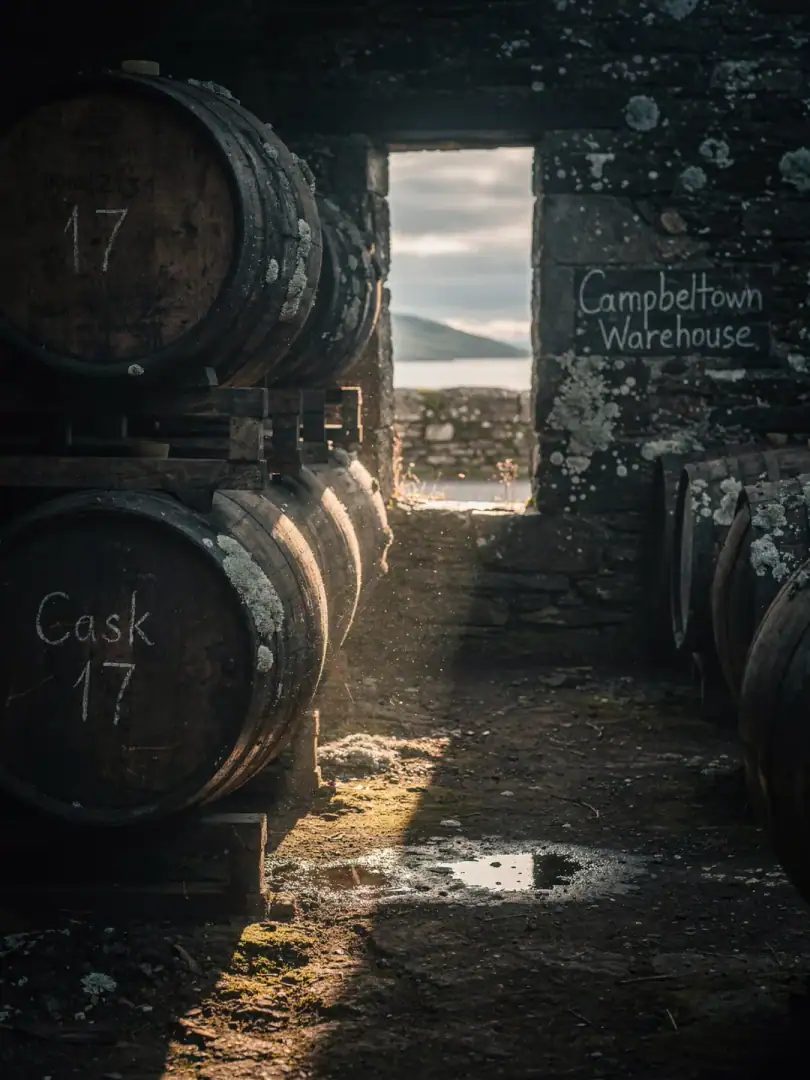
Walk through Springbank's warehouses and you're walking on bare earthen floors, which let in outside moisture almost unimpeded. Six of the eight buildings are classic dunnage warehouses stacked just three casks high. Two are more modern racked warehouses with considerably more tiers. Together they hold around 13,500 casks, all of them right here in Campbeltown.
The casks come mainly from two families: ex-bourbon casks from America and sherry casks from Spain. The bourbon casks bring mild vanilla and coconut notes. The sherry casks contribute dried fruit and a darker colour. On top of that, smaller amounts of port, Madeira or rum casks appear now and then for special releases.
Kilkerran from Glengyle also matures in this combination of bourbon and sherry wood, which has quickly given the young distillery a round, slightly oily style. Glen Scotia, meanwhile, shows what further ageing can do with its 18-year-old bottling: after years in ex-bourbon casks, the whisky spends a further year in Oloroso sherry casks.
The peninsula's damp climate means that more alcohol than water evaporates during maturation, the angel's share. So the whisky loses strength but gains depth. Distilleries in Campbeltown have been making this trade for generations. Exactly how much is lost depends on the warehouse type and the year; in the damp dunnage warehouses, the loss in alcoholic strength is often greater than the loss in volume.
In the end, it becomes clear: wood alone doesn't make a Campbeltown whisky. Only combined with the town's salty, damp warehouse climate does the character emerge that you won't find in any other region. That's why even identical casks from Kintyre often taste different from the very same cask type in the drier east of Scotland.