Firths and springs
Water & Climate
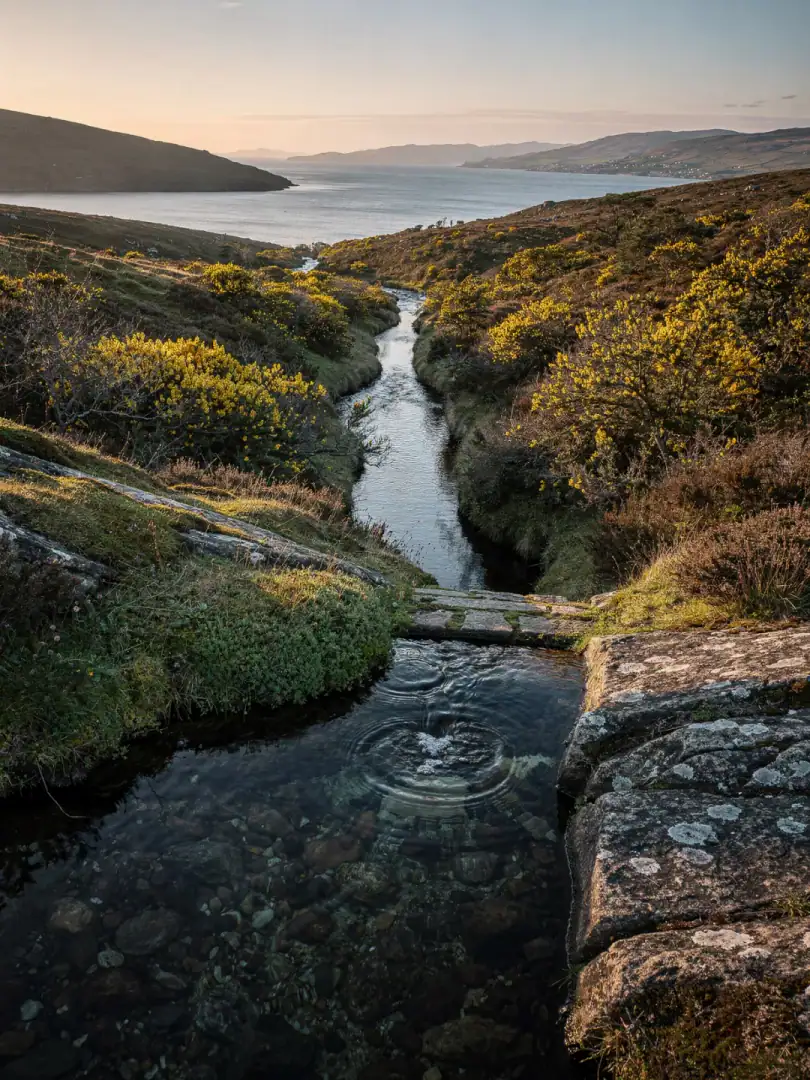
No river and no spring in the Highlands is quite like another, and that difference ends up in the glass. Glenmorangie draws its water from the Tarlogie Springs. These springs bubble up on the hill above the distillery through limestone and sandstone, picking up minerals along the way. At Dalmore, the water comes from Loch Morie, flowing via the River Alness down to the distillery on the Cromarty Firth.
Other distilleries sit right by the sea rather than a river. Oban and Old Pulteney, in Wick to the northeast, draw their brewing water from inland streams. Their warehouses, however, are constantly swept by salty North Sea air. This proximity to the sea explains why whisky from Wick and Clynelish often carries a faintly salty or iodine-like note. And yet, not a single drop of seawater ever touches the cask.
The Highland climate ranges from mild coastal conditions along the firths to harsh mountain weather further inland. Along the coast, temperatures barely shift across the year, the sea acting as a buffer. Further into the Highlands, around Perthshire, summer and winter swing much further apart, with cold, often snowy winters.
These temperature swings continue inside the warehouses, speeding up or slowing down how the whisky interacts with the wood in the cask. The more a warehouse heats up and cools down over the year, the more the wood expands and contracts. And the more whisky evaporates as the 'angel's share'. Along the mild coast, this process runs slower and more evenly than in the colder interior.