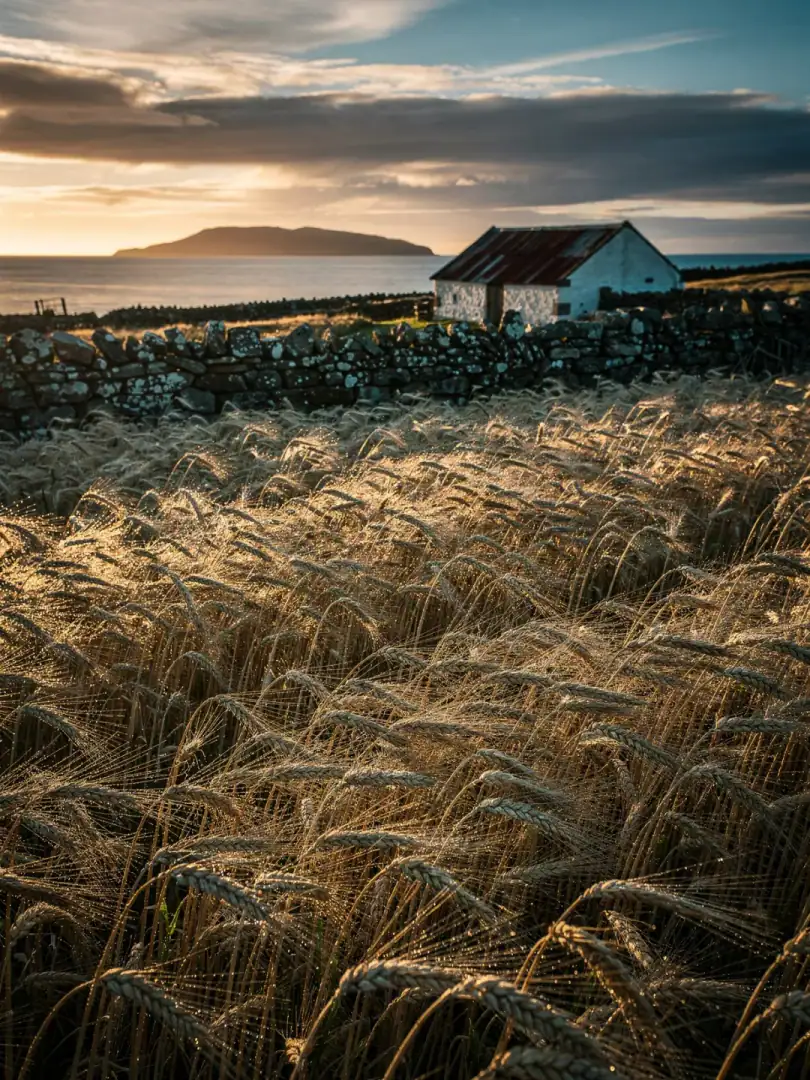
Barley from the mainland
Grain
Travel across the islands and you'll rarely spot a barley field. The wind here is strong and salty, so grain barely ripens, and the thin, stony soil offers little to work with. Almost all the malt for Highland Park, Talisker, Jura, or Tobermory travels over from the Scottish mainland. It's malted in large commercial maltings, and only milled and mashed once it reaches the island.
The Scotch Whisky Regulations of 2009 are strict. Single malt may only be made from water, malted barley, and yeast. It must be distilled in pot stills, matured for at least three years in oak casks of no more than 700 liters, all within Scotland. Other grains like corn or rye, the kind American bourbon or rye whiskey needs, are off-limits for single malt.
When it comes to peating levels, the islands go their own way. On Mull, two completely different whiskies run through the very same stills: unpeated Tobermory and heavily peated Ledaig. Distilling happens in alternating campaigns, depending on which malt is being mashed at the time. On Jura, the barley long stayed unpeated, since the tall, slender stills favored a light, clean style. Only since the late 1990s has the distillery also produced smaller batches with peated malt.
The region's youngest distillery is Lagg in southern Arran. Since opening in 2019, it has relied almost exclusively on heavily peated malt, deliberately positioning itself against the fruity, unpeated Lochranza distillery in the north of the same island. Two distilleries, one island, two malting philosophies: that's exactly what defines the whole region.