Sleeping by the Sea
Cask & Maturation
American white oak shapes the maturation of most Islay malts. These are used bourbon casks, previously filled once already in Kentucky. They impart fewer flavours of their own than new casks, leaving more room for the peat smoke. Where a bolder, sweeter note is wanted, sherry casks made of European oak come into play too, often serving a second stage of maturation at the end, a so-called finish.
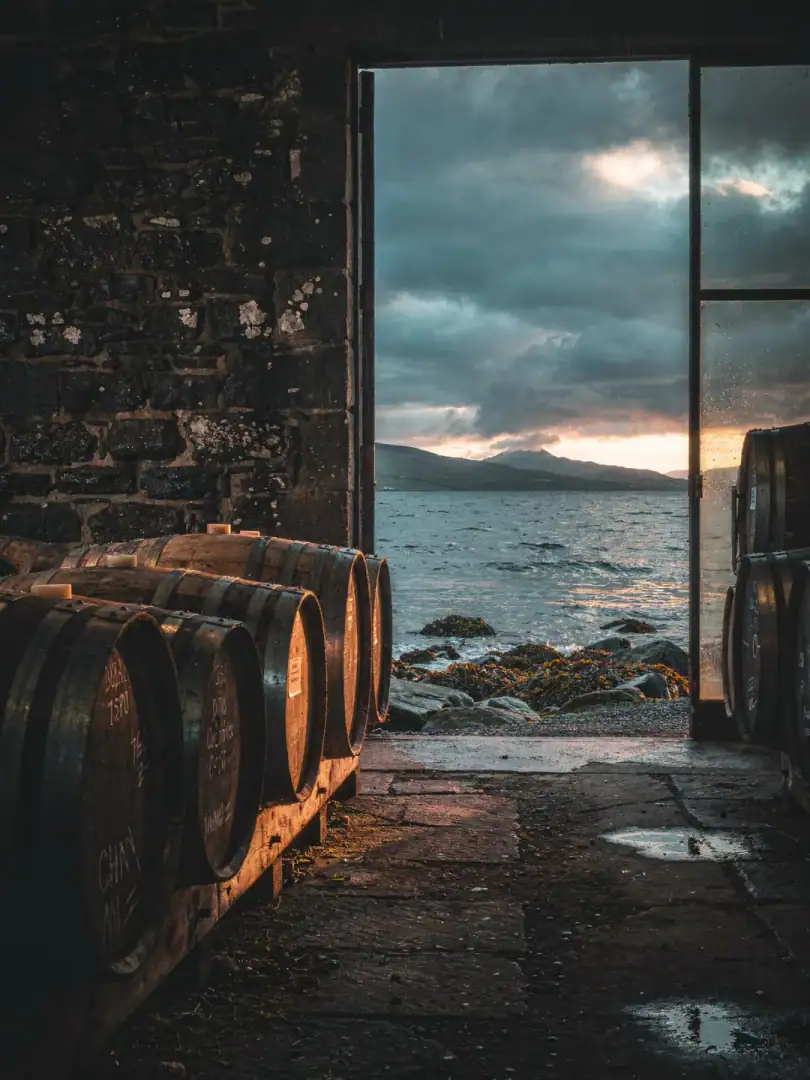
Bowmore ages part of its stock in Warehouse Number One, right on Loch Indaal. The warehouse sits below sea level, its outer wall bordering the loch. Damp, salty air moves through the open dunnage warehouses, those traditional, low stone buildings. There, the casks are stacked only a few rows high, rather than racked in tall shelving as is common on the mainland.
This climate costs time, but also alcohol. Every year, part of a cask's contents evaporates through the wood, the angel's share. On Islay, this loss at Bowmore runs at only around 1 to 1.5 percent a year. Elsewhere in Scotland, around 2 percent is typical, notably more than at Bowmore, an advantage of the island's cool, steady temperature year-round.
The longer a cask rests by the sea, the more salt the whisky supposedly absorbs. Many distillers on the island say so, even if it's hard to prove cleanly. What's certain is that a twelve-year-old Islay malt rarely tastes like a mainland cask. A cask of the same age in the Scottish Highlands simply matures differently.