Smoke, Salt, Iodine
Tasting
Ardbeg, Lagavulin, and Bowmore represent three very different faces of the same island. Tasting them side by side quickly shows just how much room there is in the word "peaty". Ardbeg 10 Year Old tastes linear and sharp. Citrus peel, soot, and salty coastal air stand at the forefront. Traces of coffee and iodine follow, but barely any sweetness to soften the smoke. That's exactly what makes Ardbeg the island's extreme, where smoke rules over almost everything else in the glass.
Lagavulin 16 Year Old goes in a different direction. The smoke remains, but it's joined by dried fruit, vanilla, and muted oak, a note some compare more to smoked tea than to a campfire. Bowmore 12 Year Old, in turn, shows itself milder and more balanced, with citrus, honey, salt, and smoke sitting close together. In the background, depending on the cask, there's chocolate or tropical fruit.
Not every Islay malt is smoky. Bunnahabhain and Bruichladdich distil their core bottlings with almost no peat, usually under 3 ppm. They taste correspondingly brighter, salty and fruity rather than smoky. For anyone wanting to get to know the island without the full smoke, these are good starting points. To understand both sides of the island, it's best to taste your way right across, from Bunnahabhain to Ardbeg.
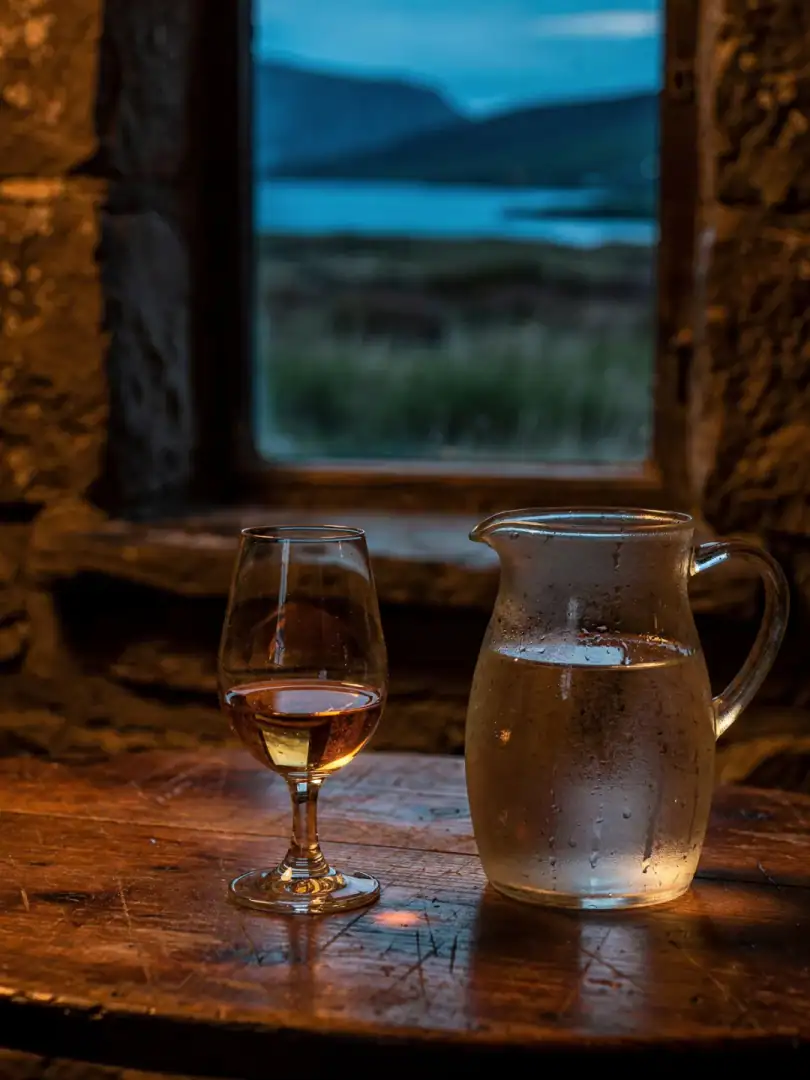
Best to taste neat at first, from a narrow nosing glass that channels the aroma upward. Only after that is a drop of still water worth adding. It slightly lowers the alcohol in the glass and often opens up aromas that were hidden behind the smoke before. This holds especially true for the heavily peated bottlings like Ardbeg or Lagavulin. Bowmore, by contrast, stays approachable neat, no trick required.