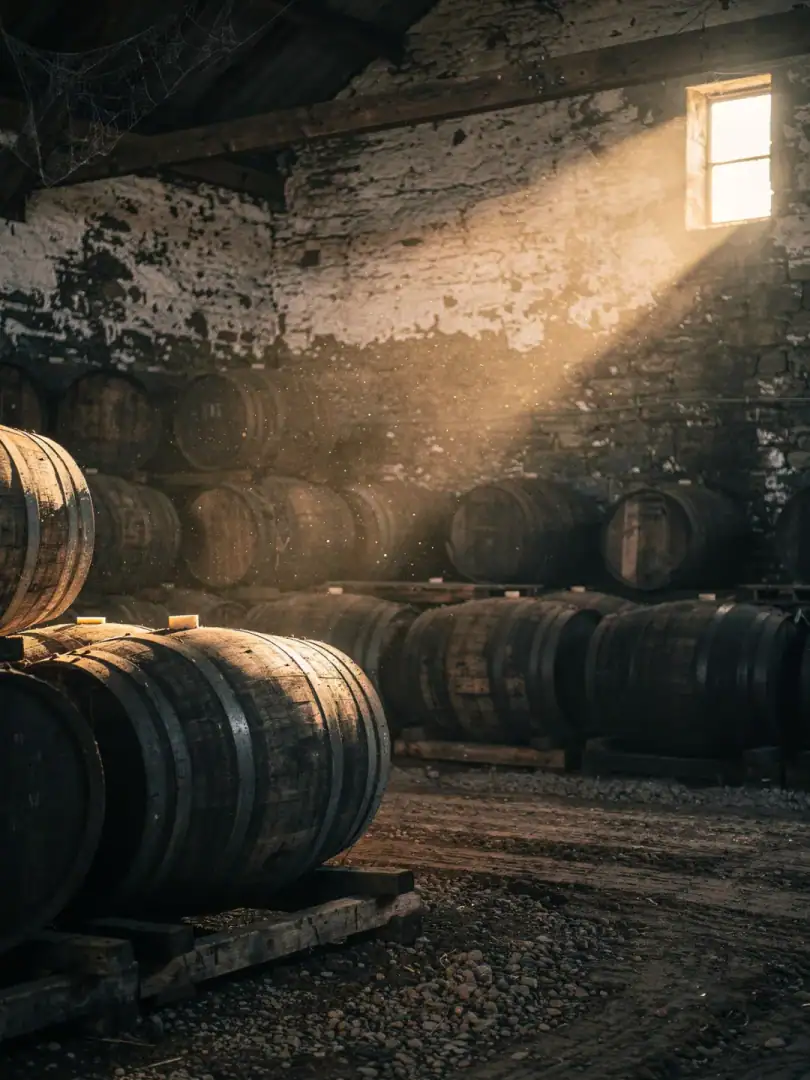
Sherry casks & warehouses
Cask & Maturation
In the low stone warehouses found in Aberlour and Craigellachie, casks are often stacked just three high, resting on floors of sand or earth. This old style of building is called a dunnage warehouse. It keeps the air more humid and cooler than the tall racked warehouses of large companies.
Speyside is best known for its sherry casks. The Macallan fills its whisky almost exclusively into casks of European oak. These casks were previously used in Jerez de la Frontera in Spain to hold Oloroso sherry, a process that alone, including growing and seasoning the wood, takes several years. Glenfarclas and Aberlour likewise rely heavily on sherry; Aberlour's a'bunadh matures exclusively in such casks.
Alongside these, almost all distilleries in the region also fill used bourbon casks from America. These casks are mostly made of white oak and give a milder, sweeter impression than sherry wood. Many bottlings blend both cask types or switch into a second cask for the final years, a so-called finish.
Every year, a small portion of the contents evaporates through the wood, the Angel's Share. In Speyside's cool, damp climate, this amounts to only about two percent a year, much less than in hotter whisky-producing countries. By law, a spirit may only be called Scotch whisky after three years in cask. Most Speyside malts, however, rest for twelve years or longer.
With every additional year in the same cask, the whisky loses its rough edges and gains colour and depth. At some point, warehouse manager and nose together decide that the moment has come to bottle.