Barley from the Mountains
Grain
Corn and rye remain rare in Swiss whisky. Almost every whisky in the country starts with barley. It's malted and fermented into single malt, using grain that has grown on the hills and foothills of the Alps for centuries. Only since 1999 has this grain even been allowed to become spirit. That's why rye or wheat whisky from Switzerland is still hard to find today.
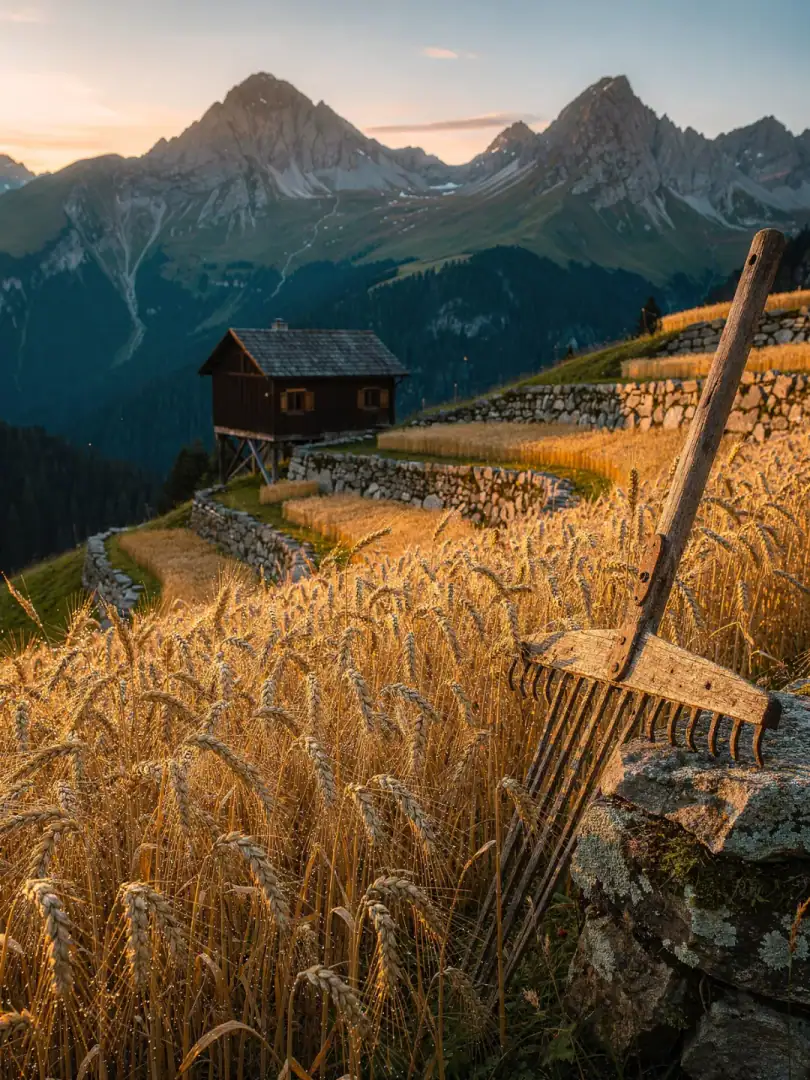
Säntis Malt takes this especially far. Since 2003, the Locher brewery in Appenzell has sourced its barley from the highest-altitude growing regions in Switzerland. Shorter summers there mean the grain ripens more slowly. This costs yield, but gives the malt more time to build sugar and aroma before harvest.
The mash is made the same way as everywhere else: from crushed malt and hot water, which breaks down the starch in the grain into fermentable sugar. Because many Swiss distillers come from brewing backgrounds, they often use the same kettles for both beer and whisky mash. Only afterward do the paths diverge: yeast management and distillation are what set the two products apart.
Legally, Swiss whisky falls under grain spirits according to national food law. There's no protected designation of its own, unlike Scotch or Bourbon. This gives distillers freedom in choosing grain, malting method, and cask. Many small producers deliberately use this freedom to set themselves apart from the big traditions.
Some distilleries now experiment with double-malted or lightly smoked grain. Others stick deliberately to simple, unpeated barley and let the cask alone provide depth. Both approaches show just how open Swiss grain choices still are, precisely because the tradition is only a few decades old.