Alpine Water & Climate
Water & Climate
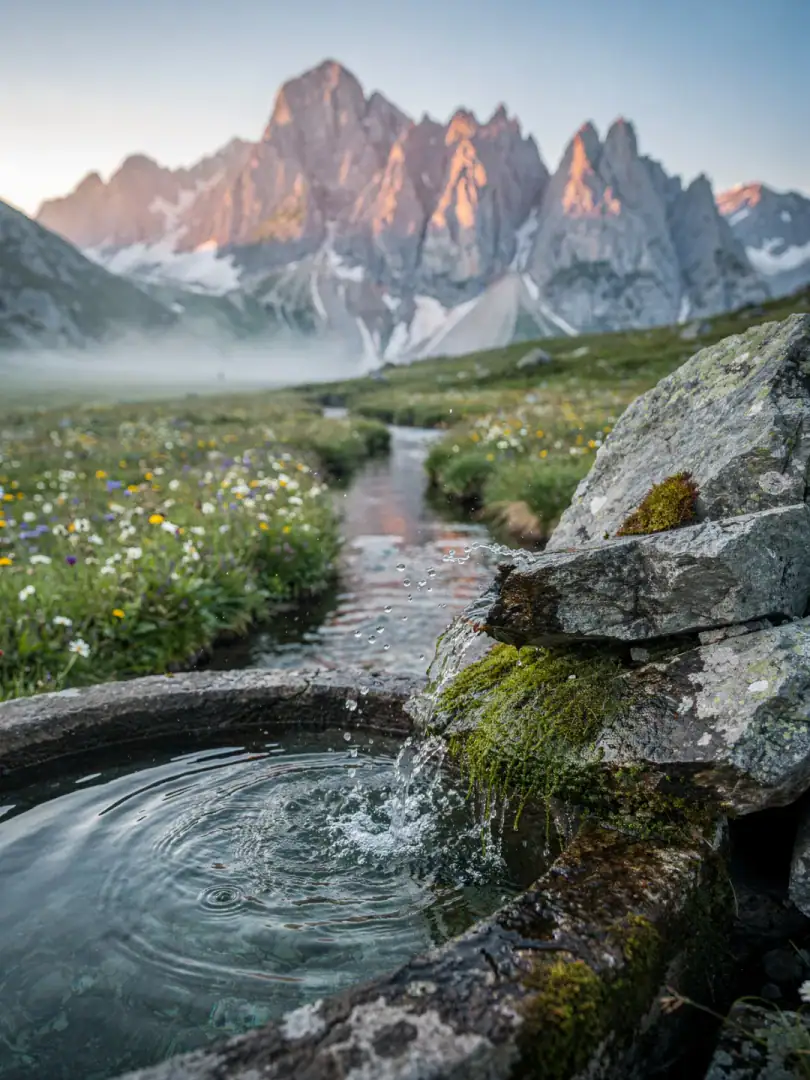
Anyone hiking through the Alpstein hears the water before they see it. Numerous springs emerge from the limestone of this mountain massif above Appenzell. Karst rock and scree filter the water on its way down. It's exactly this spring water that the Locher brewery uses for its Säntis Malt, from the mash all the way to dilution before bottling.
Limestone gives the water its mineral character. These minerals help the yeast during fermentation and later give the whisky a soft texture. Other producers, such as Sempione Distillery in Valais, rely on spring water from the Valais Alps. There, a comparatively mild, almost Mediterranean climate shapes the surroundings, unusual for a mountain region.
But climate matters most in the warehouse, not at the still. In the Swiss Alps, temperatures swing widely between summer and winter, with sometimes large differences between day and night. From hour to hour, though, they often stay steadier than in the lowlands. This stability is gentle on the cask staves. Where wood doesn't constantly expand and contract, fewer leaks develop, and the whisky loses less to evaporation.
Some producers take the principle to the extreme. One Swiss bottling matures first for four years in a rock cellar. It then spends eight more years in an ice grotto on the Jungfraujoch, at a constant minus four degrees Celsius. Cold there slows every reaction in the cask. The whisky ages, but at a glacial pace. Such extremes remain rare, but they show how seriously Swiss distillers treat climate as an ingredient.