Whisky Meets Fruit Wine
Cask & Maturation
Before a litchi liqueur cask is emptied at Nantou, it has already carried its own fruit for years. Since its beginnings in 1977, the distillery has produced wine and liqueurs from local fruit alongside whisky.
These very same emptied casks move straight on into whisky maturation. A single malt first matures for four years in a used bourbon cask. It then spends one to two further years in a litchi liqueur cask. This release was the first of its kind anywhere in the world in 2015, and sold out the same day it appeared.
Litchi is just one of several options. Plums from Xinyi, oranges from Zhongliao, and Black Queen grapes from neighboring Erlin all supply liqueur casks for further special releases. Each brings its own unmistakable fruit note.
Alongside these stand the classic casks: ex-bourbon casks of American white oak and sherry casks from Europe. Both form the basis of the core range. The sherry cask brings dark, wine-like sweetness, while the bourbon cask leans more toward vanilla and light caramel.
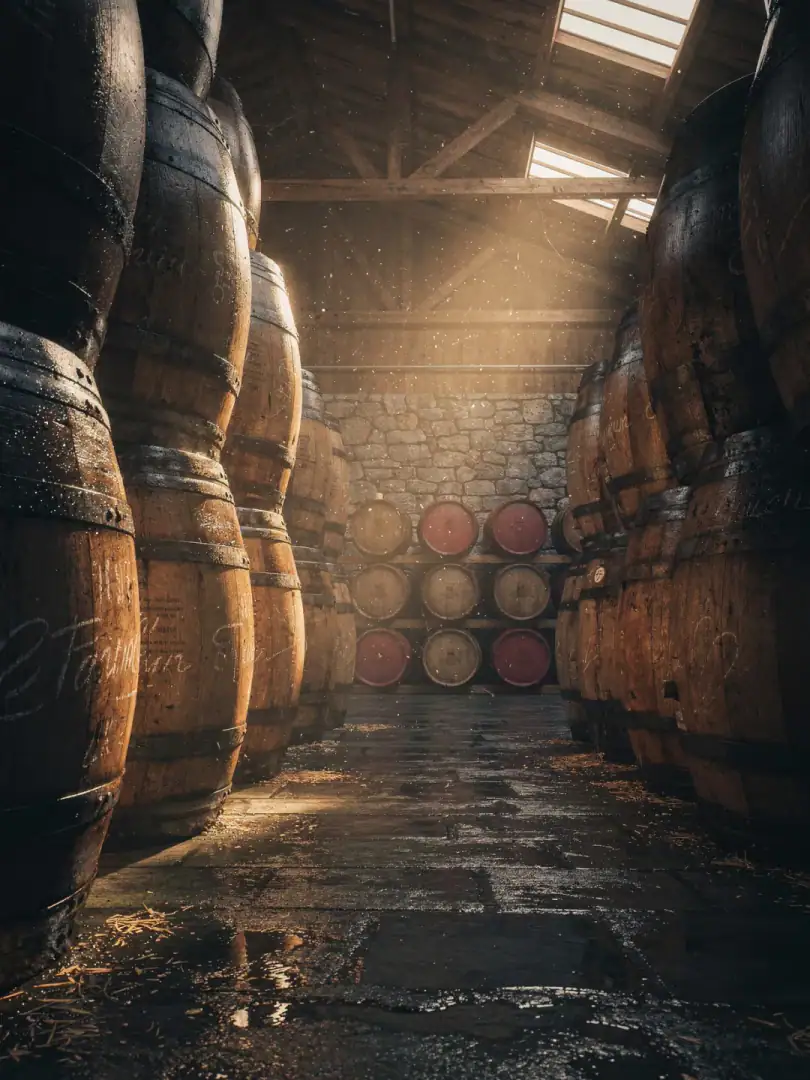
The warehouses themselves add their own touch. In central Taiwan's humid heat, the wood works more aggressively than in cool Scotland. The whisky picks up color and aroma faster. What takes ten years there is often achieved here after just four or five.
The distillery pays a price for this. A large share of every cask's contents evaporates — the so-called angels' share runs well above the Scottish rate in Taiwan. Nantou accepts this trade-off. The whisky isn't meant to seek maturity over decades. It finds it instead in a few intense years, matching the short winter window of the distilling season.