Copper & Season
Distillation
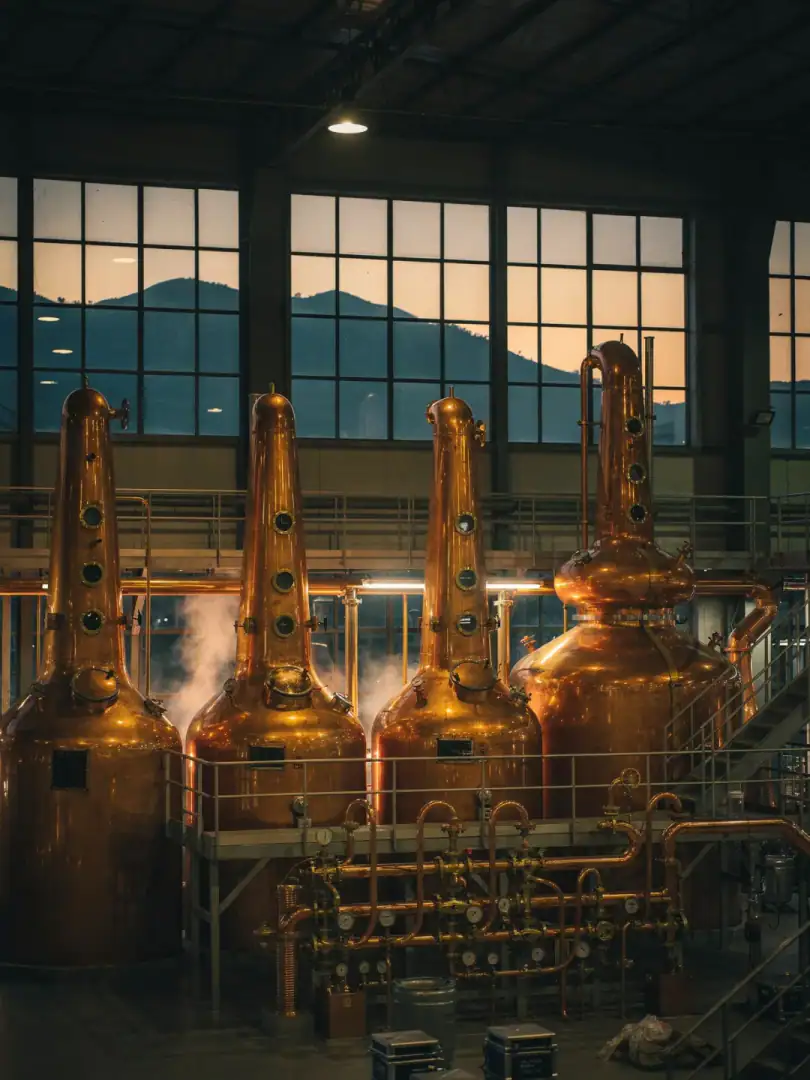
Four copper pot stills stand in Nantou's still house. They were built by Forsyths in Rothes, Scotland, the same forge that supplies many distilleries in Scotland itself. Their shape is the classic onion form of the pot still, bulbous at the bottom and slender at the neck. There are no straight columns here, as in an industrial still.
Distillation happens twice, closely following the Scottish model. First the wash still produces the raw low wines, then the smaller spirit still sharpens the character. A column still, as used by American bourbon distilleries, plays no role at Omar. Every drop passes through the classic copper pot. Some Irish distilleries even triple-distill for a lighter character. Nantou sticks to two distillations and relies instead on maturation in the hot, humid climate.
During the second distillation, the distiller cuts by hand. The foreshots and feints are too harsh and too heavy for the cask, so they run back into the next batch. Only the heart of the run, the so-called middle cut, moves on clear and mild into the casks.
Distilling happens only from October to April. In Taiwan's peak summer, the plant shuts down. Heat and humidity would send fermentation out of control before the mash even reaches the still.
These stills shape the Nantou character as well. Copper walls bind heavy sulfur notes from fermentation. The result is a raw spirit that already feels soft rather than sharp, even before the cask.
At the end of the second distillation stands a strong, clear spirit. It's too harsh to drink as it is, but exactly right to slowly mellow down to drinking strength in the cask.