Imported, Not Grown
Grain
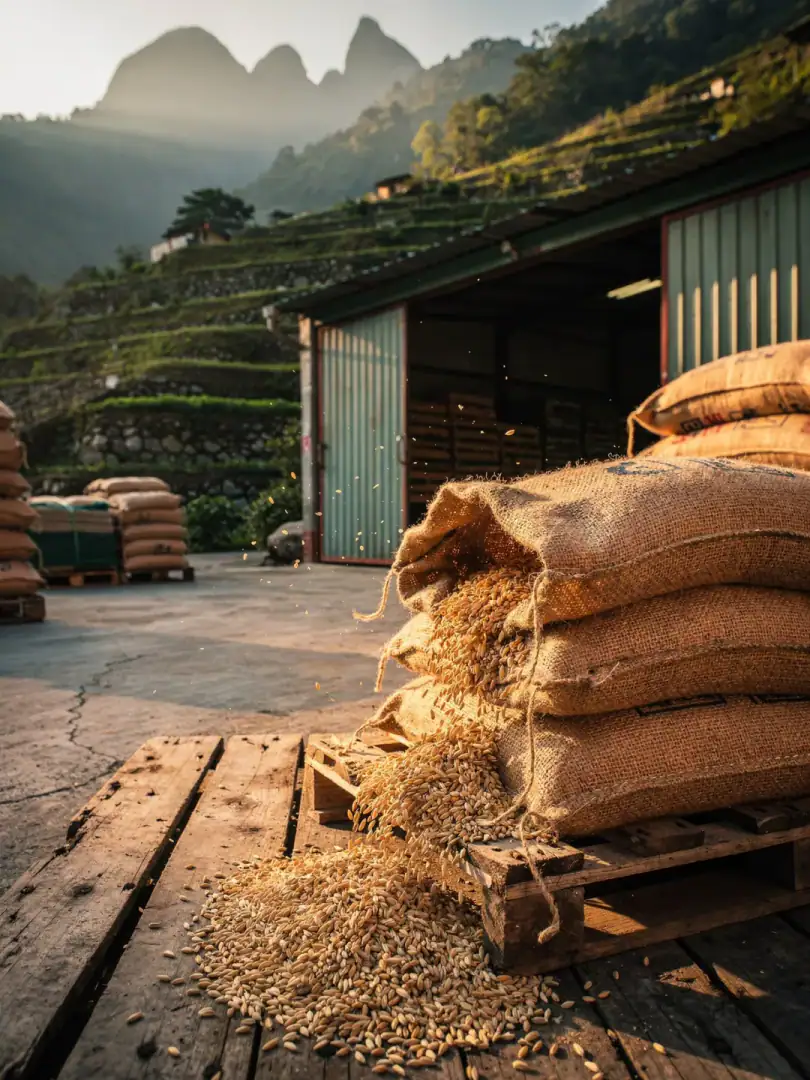
Not a single grain for Omar whisky grows in Taiwan. The malt arrives ready-made from Britain, much of it from Scotland — Nantou doesn't malt anything itself, but processes what arrives by sea.
The reason lies in the climate: barley for whisky needs cool, dry spells for ripening and harvesting, and central Taiwan's humid subtropical weather doesn't offer that. Other Taiwanese distilleries already import their malt for the same reason, and Nantou does the same.
During mashing, hot water from the distillery's own spring draws the sugars out of the milled malt, and the wort runs into the fermentation vats. There, yeast turns it in just a few days into a young, mild beer — the precursor for the still.
Other whisky styles are built on different grains: bourbon needs at least 51 percent corn, rye whiskey at least 51 percent rye, and Irish whiskey often blends unmalted with malted barley. Omar sticks to the pure single malt line — malted barley only, nothing else.
Occasionally, already peat-malted malt comes in for the smokier releases in the range — Taiwan itself has no peat bogs, so this peat also travels from Scotland. The barley behind it is usually two-row. Taiwan has no legal framework of its own like Scotland's: no law dictates what may be called whisky here. TTL nonetheless follows the international basic rule for single malt — malted barley only, double distillation in the pot still, maturation in wooden casks.
At Nantou there is only single malt, no blend and no column-still whisky — every bottle comes entirely from the distillery's own pot still.