Spring Water & Heat
Water & Climate
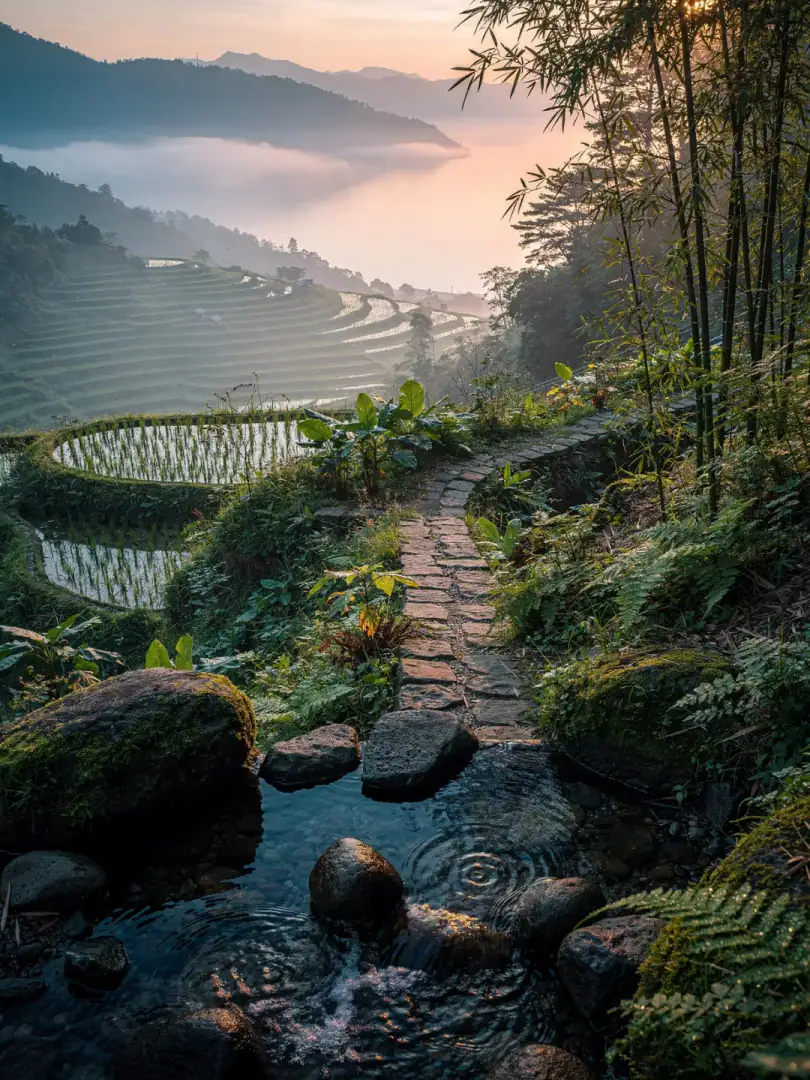
Mountains all around: Nantou is Taiwan's only county with no coastline of its own. Right in the middle lies Sun Moon Lake, and the Zhuoshui, Taiwan's longest river, winds through the highlands. To the east, the land rises all the way to Yushan, Taiwan's highest peak.
Its name means "turbid water" — but for the distillery itself, it's not the river that matters, but what comes out of the mountain. Omar is made with spring water drawn from deep underground, fed by rain that seeps through the rock of central Taiwan.
Not far from the distillery lies the Puli basin, known since the Japanese colonial era for exceptionally soft, clear water. It was there that Taiwan built its own Shaoxing wine tradition, using the very same spring water that also shapes Nantou's whisky.
Central Taiwan's climate is subtropical, hot and humid, very different from Scotland's cool, steady weather. In the warehouses, this heat lets the whisky mature noticeably faster — experts estimate the annual loss to evaporation, the "angels' share," at six to fifteen percent for Nantou, compared to roughly two percent in Scotland.
In winter the picture briefly flips: cold air from Siberia reaches even central Taiwan, causing the cask wood to contract. This yearly swing between heat and cooler months drives the whisky deeper into the wood than a steady climate ever could.
These extremes even shape the distillery's calendar: distilling happens only from October to April, when it's cooler. In the height of summer the plant stands idle, because fermentation and distillation would run out of control in the excessive heat.