Malt Without a Bog
Malt & Peat
Peat smoke is the exception at Omar, not the rule. Most releases come unpeated, with only part of the range deliberately leaning into the smoky side.
For peat itself, Taiwan simply lacks the foundation. Peat bogs need millennia of undisturbed, waterlogged stillness — Taiwan's young mountains, shaken by earthquakes, never had that kind of calm. Where Islay has meters-thick layers of peat beneath the grass, central Taiwan has no comparable ground.
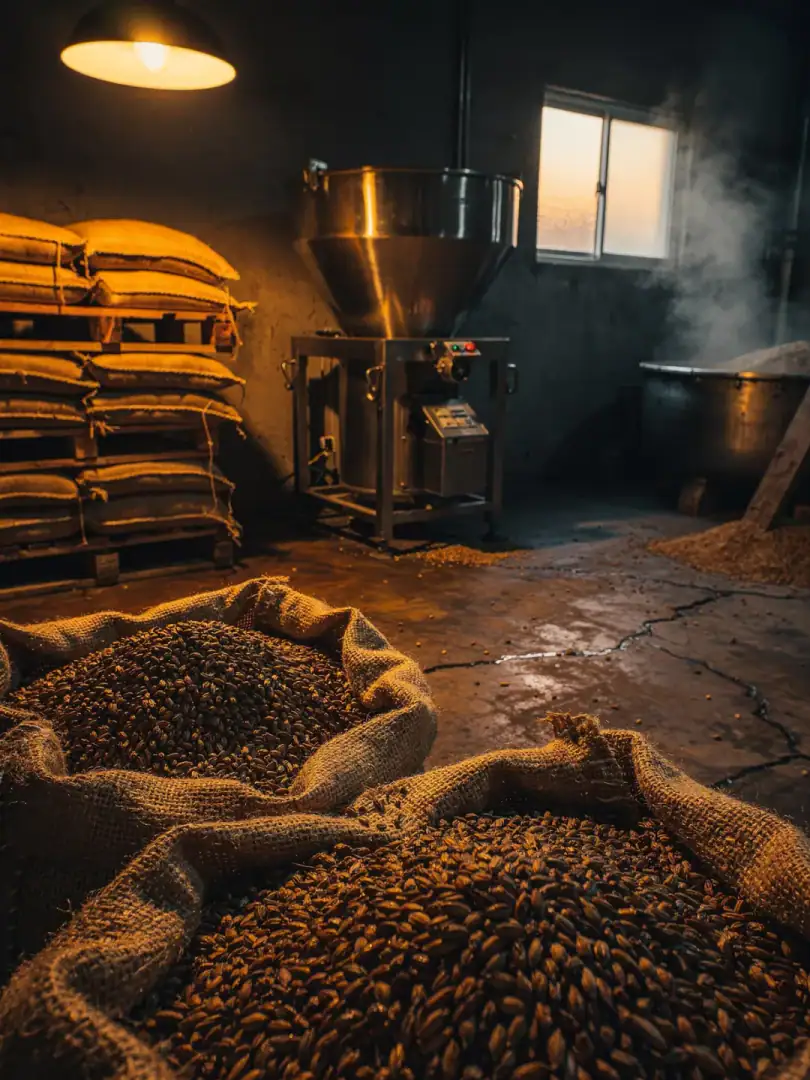
So anyone at Nantou wanting smoky whisky simply imports the smoke along with the malt: the malt arrives already kilned and dried over peat fires in Scotland. The distillery has no malting floor or kiln of its own — that step happens entirely before the sea voyage. This sets Nantou apart from the old Scottish houses that still turn malt themselves over the kiln; here the work only begins once the finished malt is milled, right next to the fermentation vats.
What does come from the ground at Nantou, instead of peat, is water. Beneath the distillery lie the layers of the basin, through which rain seeps before resurfacing as a spring.
The topmost layer is clayey basin soil, deposited over millennia of flooding from the surrounding rivers. Below that lies a thick layer of sand and gravel, where groundwater collects and is filtered in the process. Only deeper down does one reach solid sandstone from the Taiwanese foothills, which releases minerals into the water over time.
For flavor, this means: instead of the smoky note that peat gives an island like Islay, Nantou's whisky carries above all the softness of this filtered spring water into the mash. The edge comes from elsewhere — from the heat of maturation, not from the bog.
Fine clay deposited over millennia of flooding from the rivers around Nantou.
The root: It holds rainwater near the surface and lets it seep down only slowly.