Japanese Pairs with Umami
Which Whisky Pairs with Sushi and Umami?
Japanese whisky and Japanese cuisine are closer to each other than they might seem at first glance: both rely on balance rather than force, on subtle rather than loud aromas. It's precisely this restraint that makes Japanese whisky one of the few whisky styles that can hold its own alongside raw fish at all.
Why Raw Fish Overwhelms Most Whiskies
Raw fish flesh carries hardly any inherent flavor and stays delicate and cool, which is why a bold, smoky, or heavily sherry-influenced whisky can overpower it within seconds. After the first sip, barely anything of the fish's delicate flavor would remain, no matter how carefully the sushi was prepared.
Japanese whisky, by contrast, often relies on gentle blends of several malt and grain whiskies, soft cask maturation, and an overall more restrained style than many Scotch bottlings. This restraint leaves enough room for the actual star of the plate: the fish itself, not the glass beside it.
A simple comparison makes the difference clear. A bold sherry-cask whisky next to raw tuna feels almost overwhelming. The same fish next to a mild Japanese blend, however, remains clearly recognizable. The difference lies solely in the whisky's restraint. Anyone who takes sushi seriously chooses their glass with equal care.
Umami Meets Umami: The Real Connection Behind the Pairing
Soy sauce, miso, aged cheese, and even some whiskies contain umami, the fifth basic taste alongside sweet, sour, salty, and bitter — found especially in whisky with long maturation in used casks. This savory, almost broth-like depth links sushi ingredients like soy sauce or pickled ginger directly to certain whisky notes.
Anyone specifically seeking this umami note often finds it in aged Mizunara cask bottlings: Mizunara is a Japanese oak species with a particularly fine, slightly smoky, sandalwood-like spice. This cask type is considered distinctly Japanese, since it's rarely used in Scotland due to climatic reasons.
Aged Parmesan also shows this umami depth very clearly. Anyone who knows this flavor recognizes it more easily in whisky. It's precisely this recognition that makes the pairing so fascinating for many. A single drop of soy sauce for comparison is often enough as a test.
Handling Soy Sauce, Wasabi, and Pickled Ginger
Soy sauce brings plenty of salt and umami that can quickly overpower a mild whisky, so it's worth using it sparingly with sushi when a delicate whisky is on hand. Wasabi, in turn, strongly irritates the nose and can briefly dull the ability to perceive fine whisky aromas at all.
Pickled ginger between individual pieces of sushi resets the palate to zero and acts almost like a natural reset button for the taste buds. A small sip of water in between serves the same purpose well, before the next sip of whisky follows.
A tried-and-true order helps while eating: first the fish, then the ginger, only then the whisky. This way, each flavor remains clearly distinguishable. Anyone who mixes everything together in the mouth at once quickly loses track. Small pauses between bites are therefore always worthwhile.
Highball Instead of Neat: The Japanese Way of Drinking
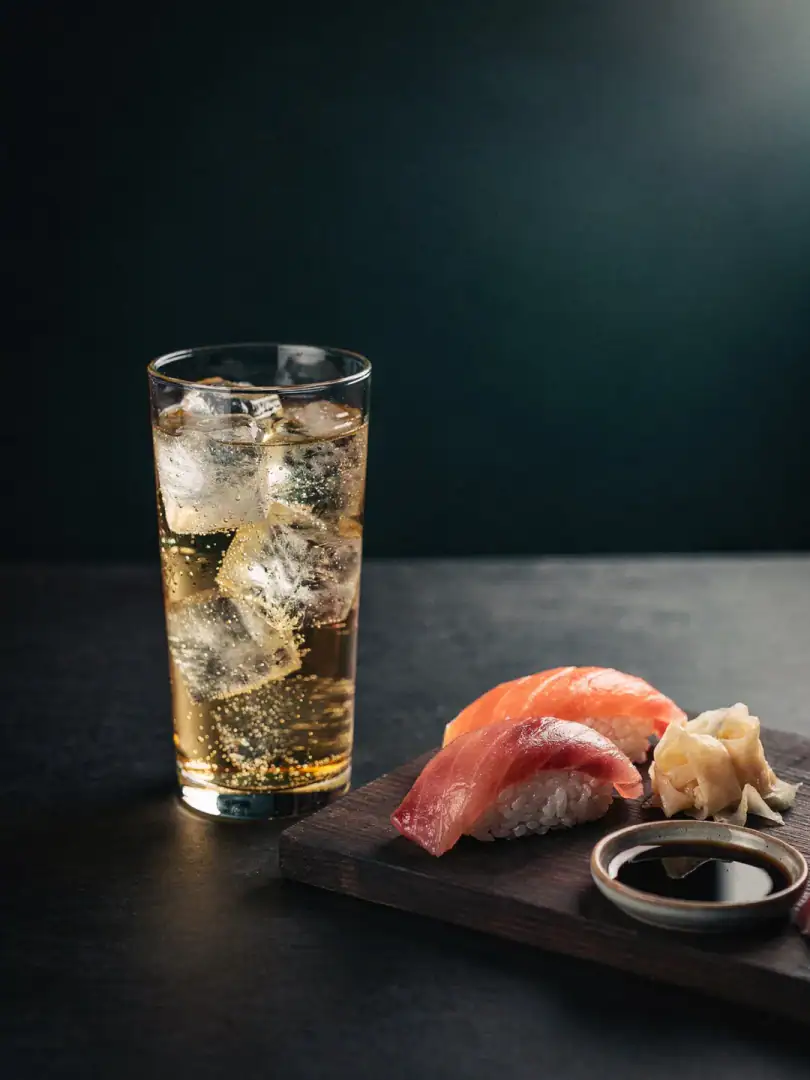
In Japan, whisky is traditionally drunk neat less often than in Scotland, and instead frequently served as a Highball: whisky, plenty of ice, and cold soda water in a tall glass, often in a ratio of about one to three. This heavy dilution significantly lowers the alcohol content and turns the whisky into a light, refreshing accompaniment to food.
This diluted, fizzy style often suits sushi and other light Japanese dishes better than a full, neat sip, since it doesn't weigh down the palate. How to mix a good Highball yourself is covered in more detail at the final stop of this journey.
A Highball is easy to put together yourself. A tall, slender glass works best for it. Plenty of ice goes in first, followed by the whisky. Only at the end is the cold soda water carefully topped up. This way, the carbonation is preserved as long as possible.