Shape, Copper, Reflux
Pot Still
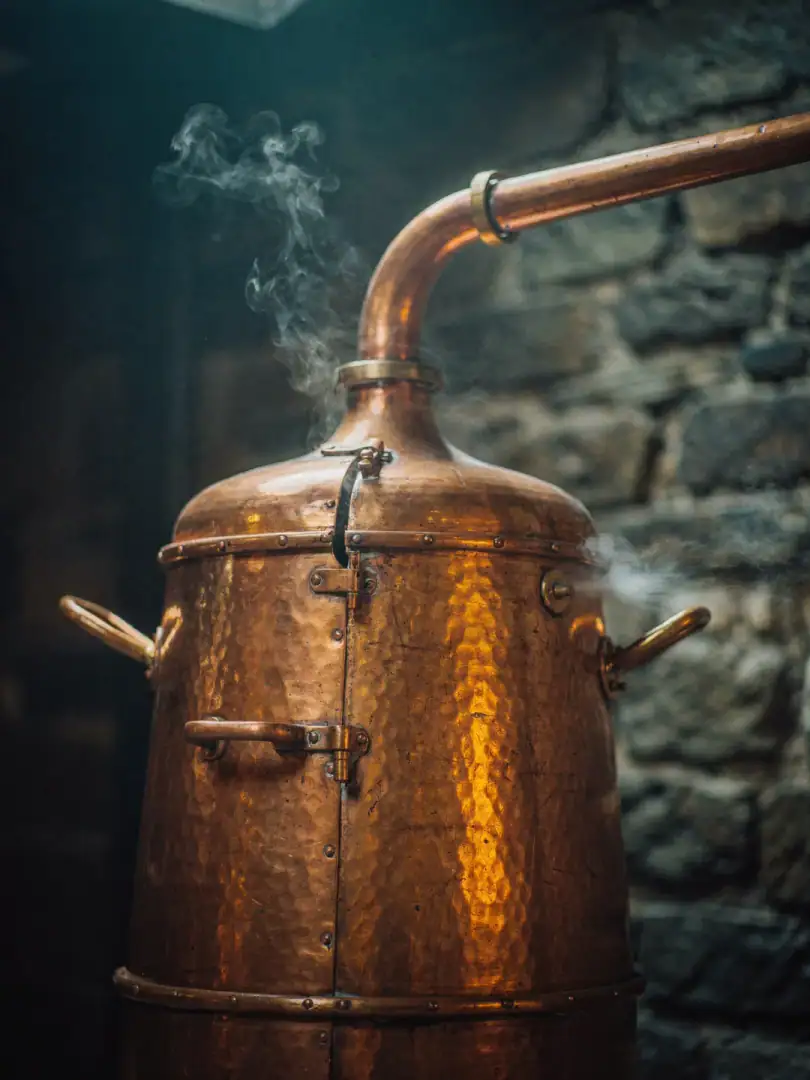
The classic copper pot still is more than just a kettle with a neck. Its shape determines how much reflux occurs, and reflux determines how light or heavy the spirit becomes.
Why Copper and Not Stainless Steel
Pot stills are almost always made of copper. The metal is expensive and has to be replaced regularly, since the walls grow thinner over the years. The reason for this effort lies in a chemical reaction: copper binds sulfur compounds that form during fermentation.
Without copper contact, these compounds would give the finished whisky unpleasant aromas, reminiscent of rotten eggs or burnt rubber. The more contact surface the vapor has with copper, the cleaner and fruitier the spirit becomes.
Distilleries with limited copper contact therefore deliberately produce a heavier, oilier style. Short, wide stills are typical for this. Slender stills with plenty of surface area, by contrast, tend to bring out light, floral notes.
Slender Necks Versus Bulbous Kettles
Still shapes range from tall and slender to short and rotund. Each shape changes how much vapor condenses and falls back into the kettle before reaching the head of the still. This return flow is called reflux.
The more reflux that occurs, the more often the vapor gets re-vaporized. This makes the result purer and lighter. Glenmorangie runs the tallest stills in Scotland, at over eight meters, producing an especially light, floral character.
At the other end of the spectrum sit compact, almost spherical stills like those at Mortlach or Macallan. They allow for less reflux, giving their new make a denser, meatier character.
The Boil Ball and Lyne Arm as Fine-Tuning Tools
Two further components influence reflux as well. The boil ball is a bulbous bulge in the lower part of the neck. It slows the vapor down, letting heavier components fall back into the kettle.
The lyne arm is the pipe connecting the still's neck to the condenser. It can run horizontal, gently rising, or sloping downward. A rising lyne arm slows the vapor further and encourages more reflux. A downward-sloping arm lets the vapor travel faster and more directly to the condenser.
Because every distillery rebuilds its stills to exact original specifications whenever one needs replacing, a house's character remains remarkably stable across generations. Even small dents in the old kettle are often deliberately copied over.
The Purifier as an Additional Return Path
Some distilleries install a third component, the purifier. This is a thin pipe running from the lyne arm back into the body of the still. It captures heavier vapor components before they reach the condenser and sends them back into the still for re-vaporization. The effect resembles an additional, built-in reflux path, independent of the neck's shape alone.
Talisker on Skye uses a purifier on its wash still, even though the shape of the still itself suggests a fairly robust style. Glen Grant in Speyside has also long relied on this technique, combined with particularly tall, slender stills. Both distilleries show that reflux doesn't come from still shape alone. A purifier can be installed or removed afterward without altering the still itself, making it a comparatively flexible tool a distillery can deploy without an expensive still swap.
Two stills, two jobs
A malt distillery classically works with at least two stills. The wash still handles the first run, the spirit still the second, finer one. The wash still is usually larger and mainly separates water and solids from the alcohol.
The result is called low wines, with roughly 20 to 25 percent alcohol. Only the spirit still concentrates and refines this intermediate step further. Just how many such runs a distillery actually performs, twice or three times, is by no means standardized even within Scotland.
Direct fire or steam heating
How a still is actually heated is a decision of its own with noticeable consequences. Historically, an open coal or gas fire sat beneath every still, and because solids can easily stick and scorch on a directly heated bottom, a mechanical chain called a rummager constantly turned to keep the still clean.
Today most distilleries heat via internal steam coils or external steam jackets, since this technique is easier to control precisely and needs less maintenance. A handful of distilleries, such as Glenfiddich or Springbank, stick with direct-fired stills, because the localized heat at the bottom of the kettle produces light toasted notes that pure steam heating simply doesn't deliver.