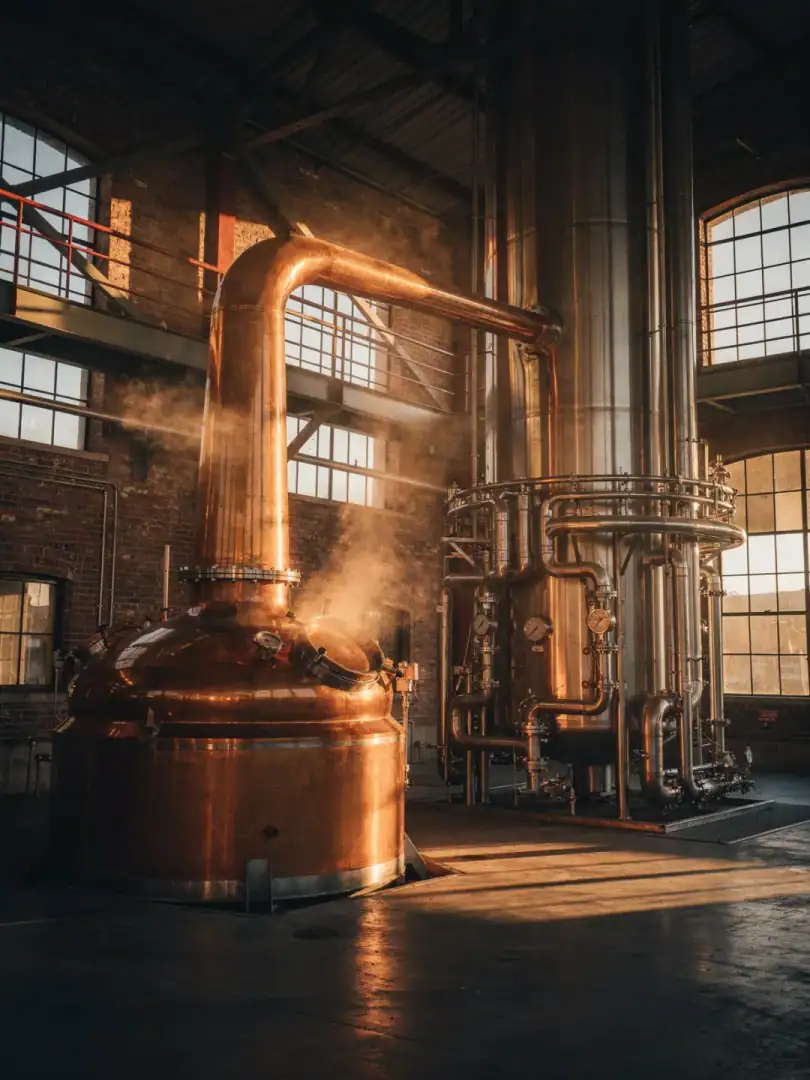
Column & Doubler
Distilling
Most bourbon distilleries between Frankfort and Lawrenceburg don't distill in small copper pot stills but in a tall column, known in the trade as a column still. It can rise several stories high. The fermented mash flows in at the top, steam rises from below, and at the end a clear low wine of about 60 percent alcohol leaves the apparatus.
This is followed by a second step rarely seen in Scotland's single malt production: the doubler or thumper, a second copper still. In a doubler, the low wine flows in as a liquid. In a thumper, it's bubbled through water as vapor—hence the name, as the device audibly thumps while working.
Copper is no accident here. It binds sulfur compounds from the vapor and makes the spirit cleaner. How much this second distillation raises the alcohol level helps determine the later barrel-entry proof, which by law may not exceed 62.5 percent alcohol.
Only a few houses depart from the column-still model. Willett in Bardstown still distills in classic copper pot stills, an image otherwise more associated with a Scottish distillery than with Kentucky.
The cut—that is, which part of the spirit is allowed into the barrel—is fixed by law for bourbon. The raw spirit may not exceed 80 percent alcohol, or the result would taste more like neutral spirit than corn and grain.
So, despite its industrial scale, a piece of craftsmanship survives, from the copper still to the master distiller's nose on the finished spirit.