Malt without Peat
Malt & Peat
In Kentucky, no one travels to a peat-bog malting house, because there isn't one. The limestone soil of the Bluegrass region holds little standing water. Without a standing bog, no peat forms either—plant remains decompose instead of compacting into peat over millennia.
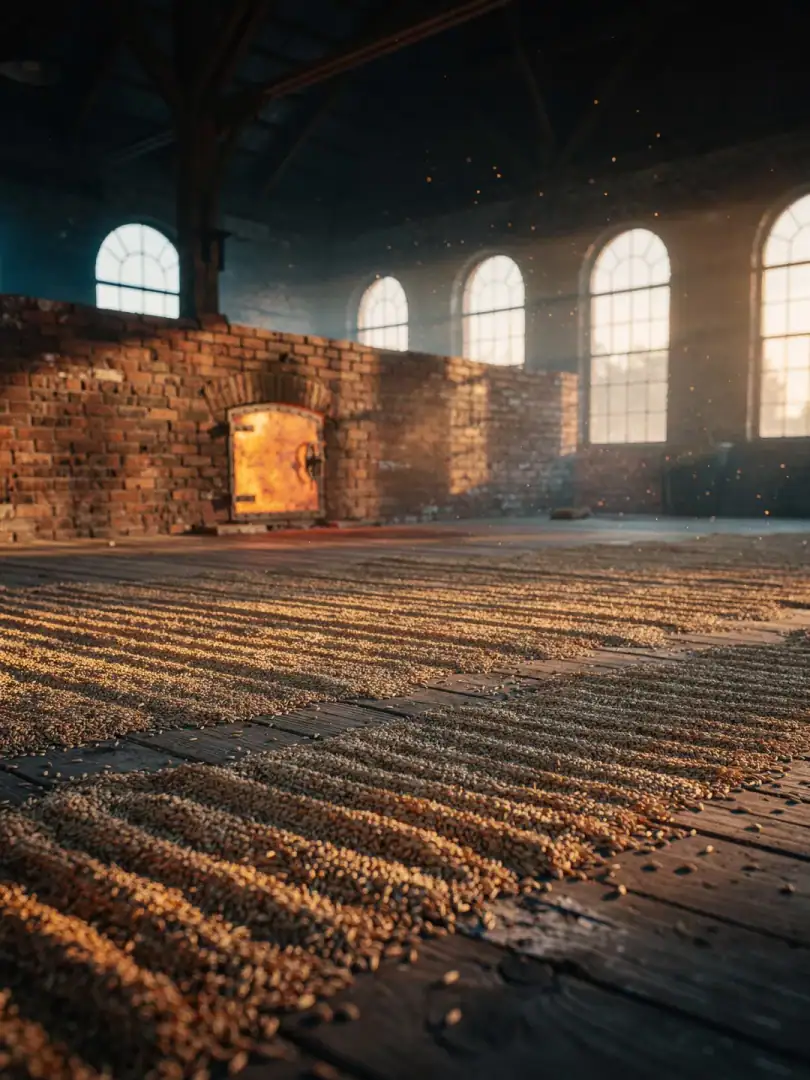
This shapes the flavor: bourbon practically never smells of smoke. The malted barley that a distillery like Heaven Hill in Bardstown needs is dried in modern kilns using hot air, not over a peat fire. This brings it to a phenol level near zero, far removed from the thirty to fifty ppm that some smoky Scotch whisky reaches.
Malting still happens, for a practical reason: only barley malt supplies enough enzymes to break down the starch from corn, rye, and wheat into fermentable sugar. Five to fifteen percent of the mash bill is usually enough for this. Because the demand is so large, the big houses between Bardstown and Frankfort buy their malt already malted rather than malting it themselves.
Smoke is absent from bourbon, but roasted notes are not. They come from the charred barrel, not the kiln—more on that under maturation. Scottish distillers on Islay once used peat because it was the only fuel available on the moor. Kentucky had forest instead, and later coal, which is why no peat tradition ever developed here.
Anyone visiting a distillery between Bardstown and Louisville will therefore rarely see a kiln with peat smoke. Instead, large corn silos often stand right next to the malting house.
Dark, humus-rich soil in which the region's corn and grain grow.
The root: This rich soil supplies the corn—Kentucky needs no peat bog for that.