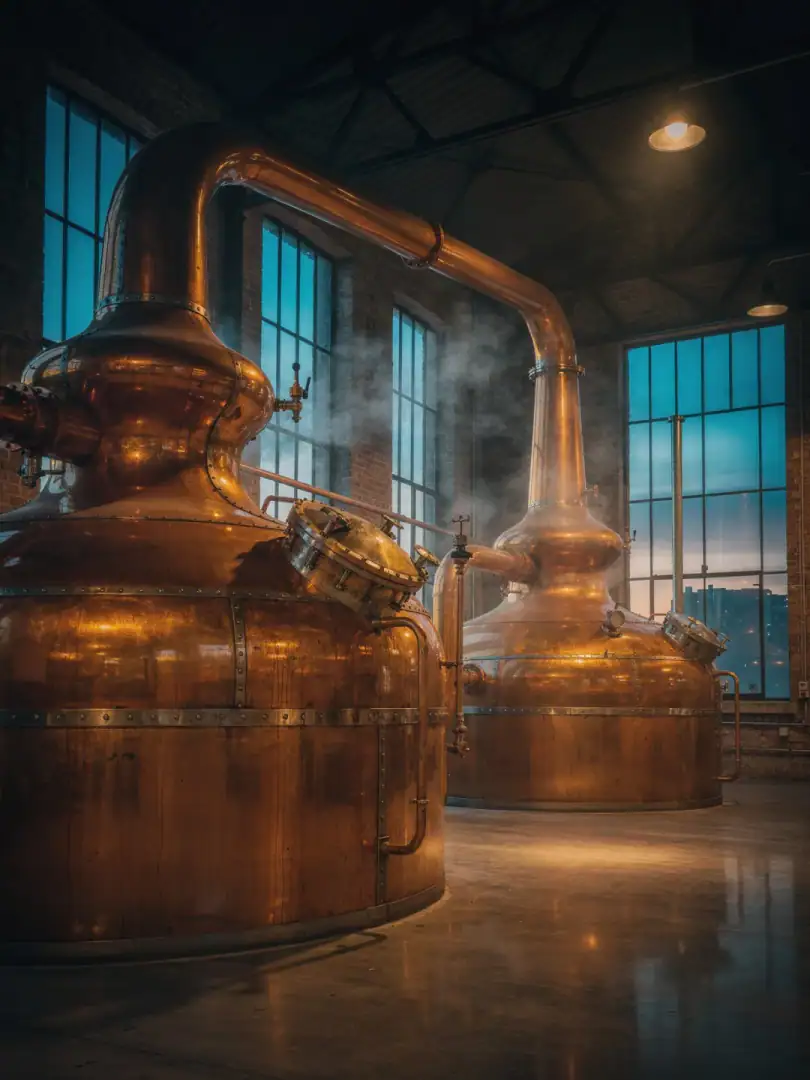
Copper, not columns
Distillation
Step into Westland's still house and you'll see two copper pot stills of different sizes, one holding 7,570 liters, the other 5,670 liters. This allows the mash to be distilled in two stages, concentrating it step by step before the low wine goes into the barrel.
Copperworks on Seattle's waterfront relies on traditional copper pot stills sourced from Scotland, built specifically for the double distillation of malt whiskey. In 2018, the American Distilling Institute named the distillery Distillery of the Year, with the care given to these very stills playing a key role.
In Portland, Westward distills its mash, fermented with brewer's yeast instead of distiller's yeast, twice in a slow, low-reflux pot still that leaves more of the grain character in the distillate than a highly reflective setup would. The result is a low wine that feels heavier and spicier than one from a lean, high-tech still.
All three distilleries stick with copper pot stills and forgo continuous column stills, common in bourbon production. The cut, the decision of when the heads end and the tails begin, rests with the head distiller at all three; there's no automated control.
So hands-on work at the copper remains the region's common thread. Size, shape, and reflux of the stills vary from distillery to distillery, and each operation draws its own character from that.
Visit all three houses in turn and you'll hear nearly the same explanation each time: the still shapes the eventual whiskey more than any later cask maturation, which is why it's the element least tinkered with. Yet each distillery has its own coppersmith and its own preferences.