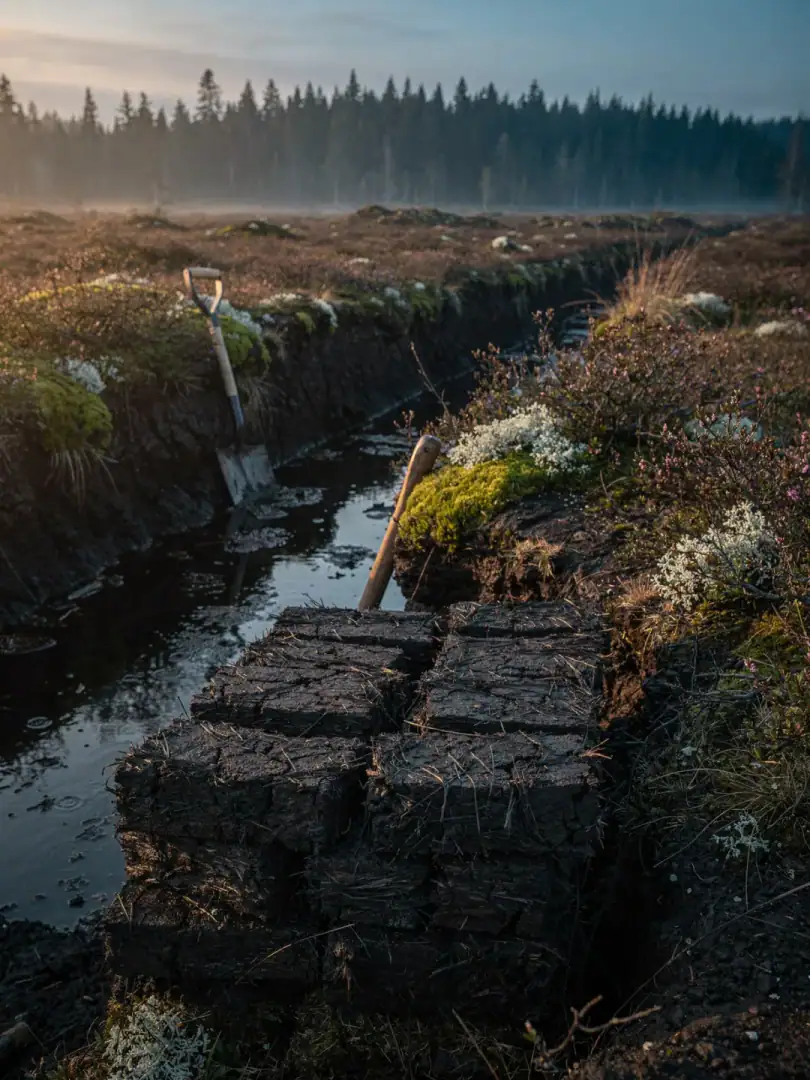
Bog, not Islay
Malt & Peat
Only a handful of distilleries in the region opt for peat at all, unlike Islay, where it's found almost everywhere. Westland sources its peat from a bog about two hours' drive from Seattle. There, the distillery has it cut below the water line rather than draining the entire bog.
The grain is usually malted off-site at Skagit Valley Malting, which also produces smoked and peated malts for its customers. For Westland's peated bottling, Solum, they blend one hundred percent peated malt with a larger proportion of unpeated, locally grown barley, so the smoke never takes over.
In flavor, this smoke differs markedly from Islay. Instead of medicinal, briny smoke, the Washington bog brings earthier, mossy notes with a hint of sage and lightly charred wood. Anyone expecting Islay smoke will be surprised; anyone who knows the Cascade forests will recognize it instantly.
A look into the peat cutting reveals how the bog is built up. On top lies a living moss layer, beneath it loosely woven fibrous peat. Deeper down comes dense, dark black peat, heavily decomposed and moist, from which the distillery cuts its smoking material.
Most distilleries in the region skip smoke entirely. Their real subject is the barley itself, not the bog beneath it. Copperworks and Westward produce unpeated single malt, letting the grain speak in its own sweeter voice. Westland, with Solum, remains the deliberate exception.
In the end, a simple principle applies. In the Pacific Northwest, peat is a tool for individual bottlings, not a hallmark of the whole region as it is in Scotland.
Living and dead peat moss, spongy and waterlogged.
The root: Holds Pacific winter rain like a sponge and feeds the streams from which the distilleries draw their water.