Oak, rain, patience
Cask & Maturation
The federal law in effect since 2025 also sets the framework for casks. Permitted are oak barrels, used, uncharred new, or charred new, with a maximum capacity of 700 liters. Only whiskey matured at least two years in such a barrel may be called Straight American Single Malt Whisky.
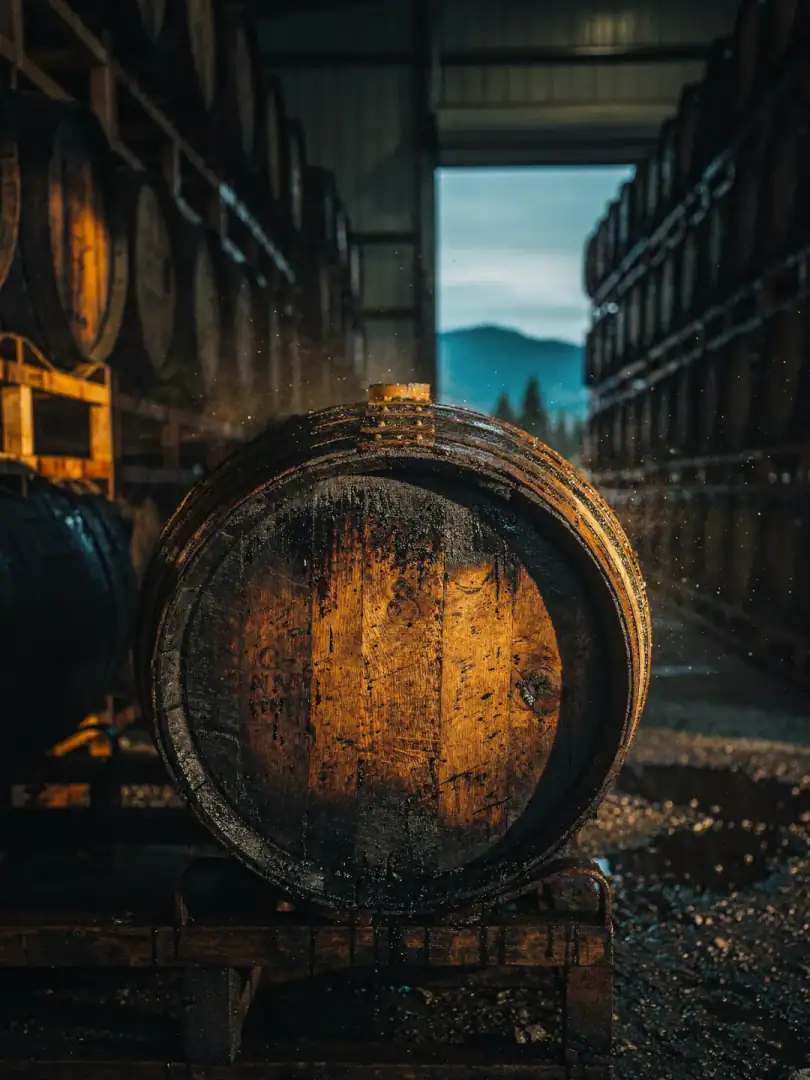
Copperworks in Seattle matures its whiskey mostly in large, freshly charred American oak barrels. The barrels are staved, bent, and charred in Kentucky before making their way to the West Coast. The char layer inside lends the young whiskey vanilla and caramel notes, while the wood itself contributes tannins and color.
In the region's damp, mild climate, less alcohol evaporates than in a hot southern climate. The warehouse breathes more calmly, and the barrels lose their contents to the so-called angel's share more slowly. That gives the distilleries more time without the whiskey picking up too much wood too quickly.
Westland ages some of its barrels in Seattle warehouses left open to the city's changeable weather. Day and night temperatures work on the barrels this way, even though the swings are milder than in Kentucky's continental climate. Westward in Portland also matures its spirit under similarly mild conditions.
Some bottlings undergo additional finishing in used barrels, such as former sherry or wine casks. This adds extra spice and color to the barley's naturally mild character.
So in every warehouse across the region, the same equation plays out: damp air, moderate temperatures, and a lot of patience. This stands in contrast to the fast, heat-driven maturation the American South is known for, and it's exactly this style that the new federal rules have, since 2025, officially recognized as its own whiskey category for the first time.