Only barley counts
Grain
Bourbon runs on corn, rye whiskey on rye, but in Washington and Oregon since 2025, only one grain counts: one hundred percent malted barley. That's the requirement under the new Standard of Identity from the US Tax and Trade Bureau (TTB), published in the Federal Register on December 18, 2024, and in effect since January 19, 2025.
The rule demands more than just the grain. Distillation may not exceed 160 US proof, barrels may hold no more than 700 liters, and the bottled spirit must be at least 80 proof. Anyone who bottled before the deadline may still sell under the old labeling until January 2030.
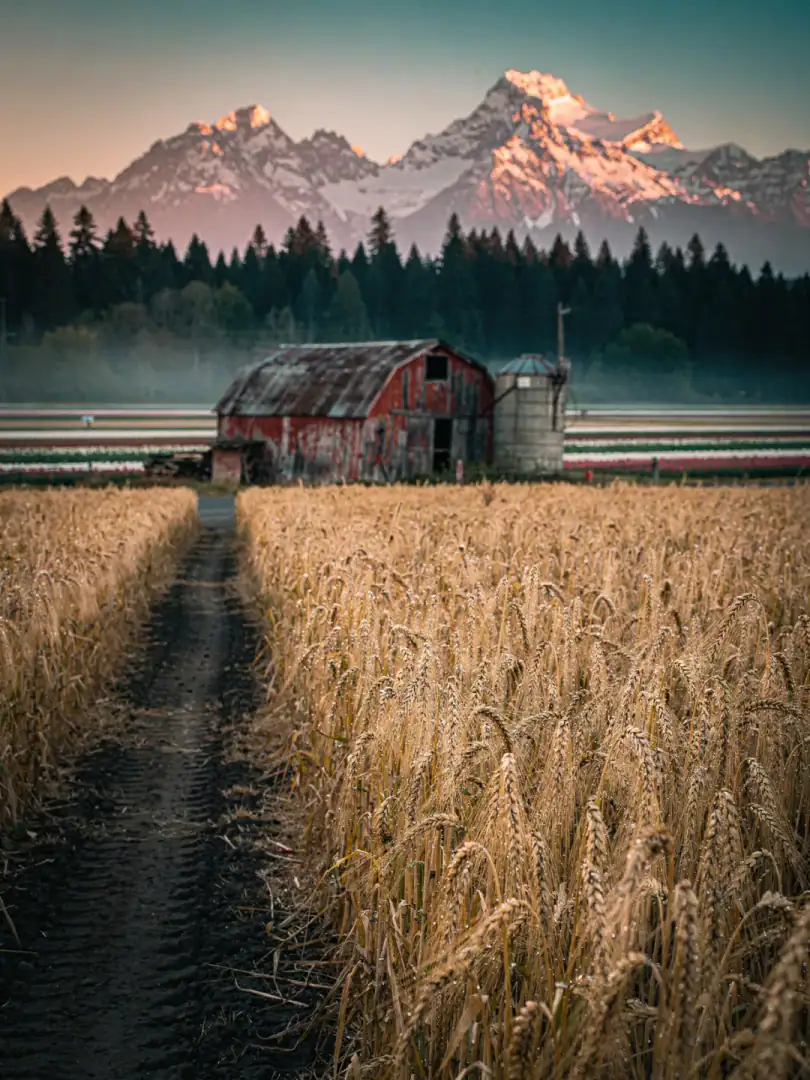
The grain itself often comes from the local neighborhood. Skagit Valley Malting, a craft malthouse an hour's drive north of Seattle, supplies both Westland and Copperworks with malt from locally grown barley.
Two varieties stand out: Fritz, a barley bred at Washington State University that thrives in the state's wet west, and Talisman, a British winter barley with roots in the famous Maris Otter variety.
Westward in Portland takes its own approach to mashing. Instead of ordinary distiller's yeast, brewer's yeast is used, working the mash for ninety minutes before fermentation begins. The result tastes fruitier and softer than a mash fermented with pure distiller's yeast, a small but noticeable difference in the finished whiskey.
The hundred percent barley clearly sets the region apart from the bourbon states to the south, where corn calls the tune, making Washington and Oregon a slice of American whiskey country that, at least in terms of grain, sits closer to Scotland than to Kentucky.