Rain from the Pacific
Water & Climate
Rain shapes almost everything here. The Pacific Northwest ranks among the wettest corners of the US. This same damp sky determines how maturation happens here.
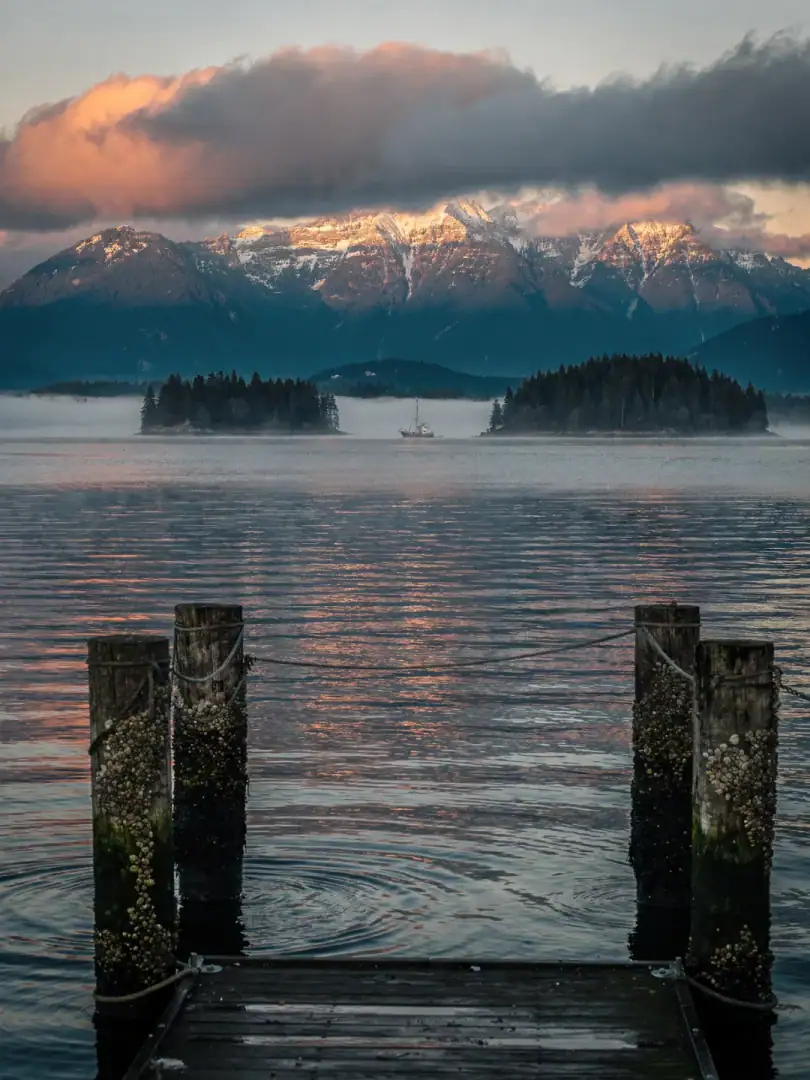
Seattle sits on Puget Sound, an inlet of the sea between the Cascades to the east and the Olympic Mountains to the west. This setting keeps the climate mild and moist.
Westward in Portland draws its water from the Bull Run watershed on Mount Hood, one of the cleanest source areas in the country, fed by rain and the volcano's melting glacier water. Clear Creek in Hood River on the Columbia River has also relied on the same mountain's cold springs from the very beginning.
Further north in the Skagit Valley, the river of the same name creates moist, fertile soils. Barley for Westland and Copperworks grows on this land, and its water comes from the glaciers of the North Cascades.
The maritime climate rarely brings hard frost or extreme heat. Instead, there are months of gray skies during which the air in the warehouses barely dries out. For the barrels, this means slower, calmer maturation than in hot Kentucky, with less evaporation but just as much patience required.
So every distillery in the region stays closely tied to its own body of water, whether sea inlet, volcanic spring, or glacial river. The water becomes a quiet part of the recipe long before the first mash is cooked. Anyone laying out a map of the region spots the pattern immediately: each of the four major distilleries sits by water that differs in texture and origin from its neighbors, ranging from the saltwater of the Sound to the freshwater of the volcano.