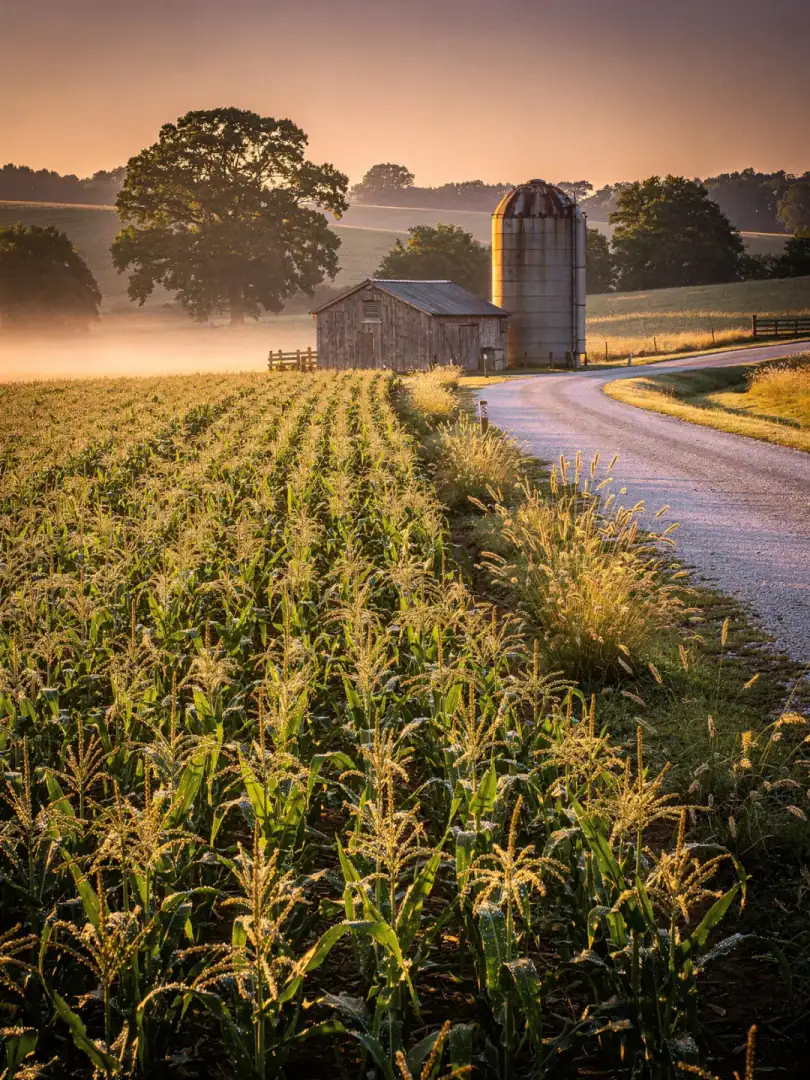
Corn before the law
Grain
Anyone wanting to call their spirit whiskey in Lynchburg or Tullahoma starts with the grain, not the maple charcoal. The 2013 law requires a mash bill of at least 51 percent corn, just like Kentucky bourbon. The rest is usually made up of rye and a small amount of malted barley, which supplies the enzymes needed to convert starch into sugar.
The high corn content shapes the character from the very start. Corn brings sweetness and body, while rye adds spice and a dry bite. Some distilleries in the region use wheat instead of rye. That makes the whiskey rounder and softer, with less peppery edge on the finish.
Tennessee Whiskey and bourbon are also alike in their legal limits. Both must come off the still at no more than 80 percent alcohol and go into the barrel at no more than 62.5 percent. Bottling happens at a minimum of 40 percent. The difference doesn't lie in the grain or these numbers. It lies in an extra step afterward: filtration through maple charcoal before barreling, which the law recognizes as grounds for its own category.
The mash itself is made in large vessels, where ground grain is mixed with hot water. Often a portion of the previous fermentation is added, known as the sour mash setback. This acidic residue stabilizes the pH and ensures that every batch ferments under the same conditions, batch after batch, year after year.
Despite the nearly identical mash bill, a producer in Kentucky can never call their product Tennessee Whiskey, and vice versa. Origin matters just as much as the recipe. It's exactly this combination of grain, state, and maple charcoal that turns a simple bourbon recipe into its own legally protected category.