Bar Culture, Not Farmhouse Table
Drinking Culture
France doesn't really have a drinking tradition built around vodka. Wine, pastis, and, in the Charente, Cognac as a digestif shape everyday life instead. Vodka remains something of an import concept, one that traveled to the US and came back to Europe again. Ask around in Amiens or Cognac for a vodka toast, and you're more likely to get a shrug than an answer.
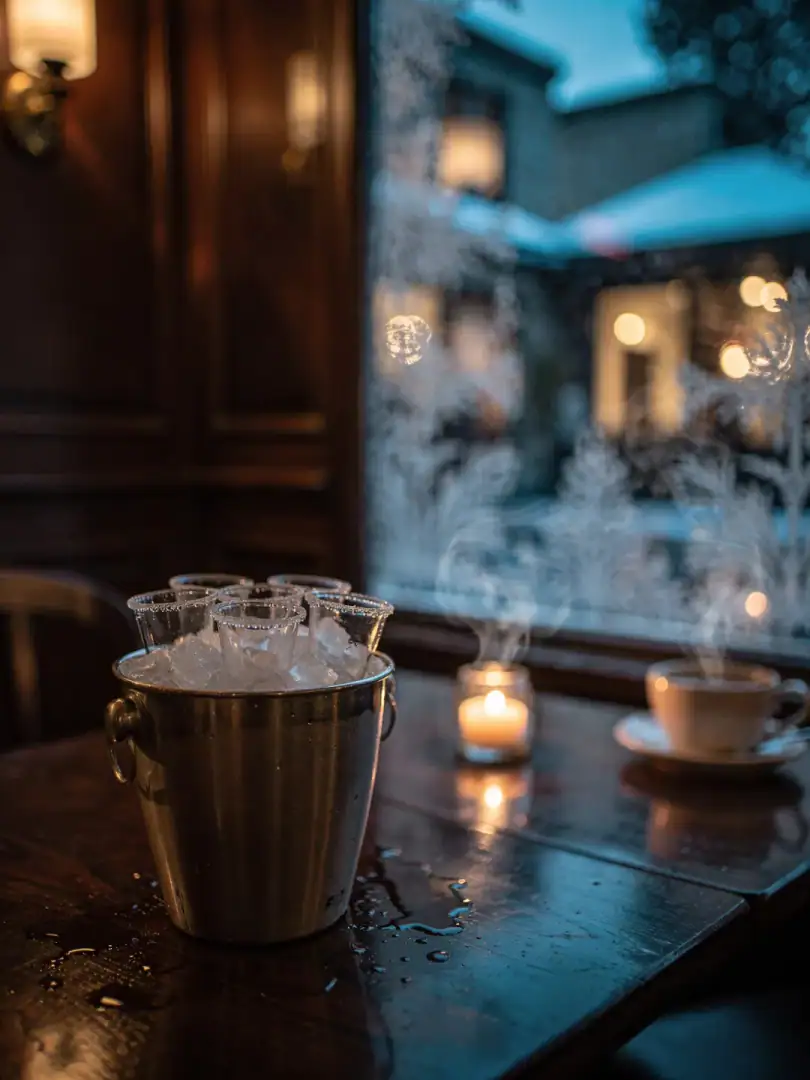
The drinking culture that shaped Grey Goose and Cîroc took form mainly in American bars and clubs of the late 1990s and 2000s. It's served ice-cold from the freezer, neat in a small glass, or as the base for cocktails. The image behind it is luxury, not conviviality at a farmhouse table. Cîroc has reinforced this image since 2007 through a marketing partnership with musician Sean "Diddy" Combs, still part of the brand's story today, according to Diageo.
Both are best served well chilled. Cold smooths out the mild, fairly neutral flavor of these vodkas and masks flaws more easily than room temperature would. A toast, a fixed ritual, or a set amount per round, the kind of custom familiar from Slavic drinking cultures, never developed around either of these two French vodkas.
In French bars, vodka from this region tends to show up mixed rather than neat. It ends up in a Moscow Mule, a Cosmopolitan, or simply with tonic, rather than as a single cold shot the way it's typically drunk in Poland or Russia. No fixed toast has ever taken hold in this cocktail culture; the range of mixed drinks is simply too wide for that.