Limestone Instead of Birch Charcoal
Filtration
There's no mention of birch charcoal here, the material so often cited in Poland or Russia. Filtration for this vodka begins well before distillation, with the water itself. As it travels through the Charente's chalk layers, sediment and particles are naturally held back, before the water is even drawn.
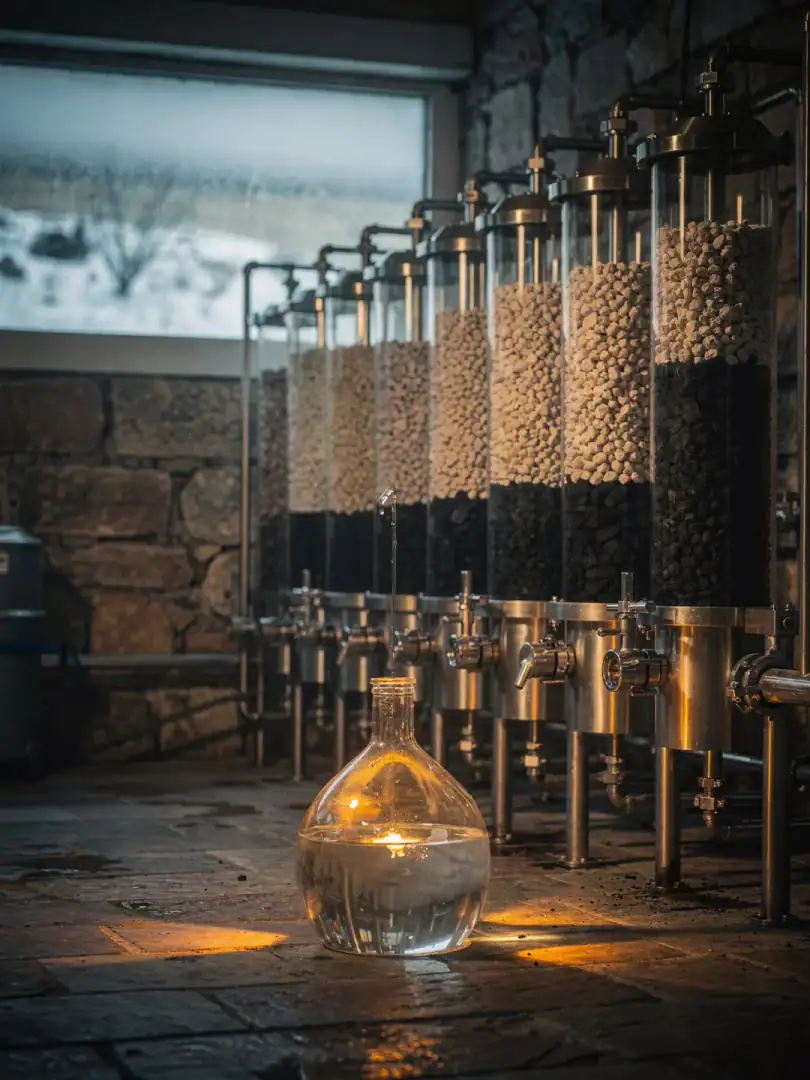
Next comes, according to the distillery, a technical stage: double reverse osmosis. Water is forced under pressure through a fine membrane that retains dissolved minerals, further reducing the calcium and magnesium content. Only once the finished spirit and water have been combined does the blend pass through a final filter of cellulose and activated carbon, according to the company.
Objectively speaking, activated carbon is no magic ingredient but a standard technique in the beverage industry. The porous carbon binds certain aroma and flavor compounds to its surface, giving the vodka a more even character. It doesn't make the spirit "purer" in the almost mystical sense advertising sometimes implies. How strong the effect is depends on contact time and the amount of carbon used—figures the brand doesn't publish.
Cîroc, by contrast, forgoes any comparably documented filtration stage. Instead, the brand relies on the quintuple distillation itself, including that final pass through the copper pot still, to achieve a clear, rounded vodka. Two brands from neighboring regions thus solve the same challenge in different ways. Legally, both paths qualify equally as vodka.