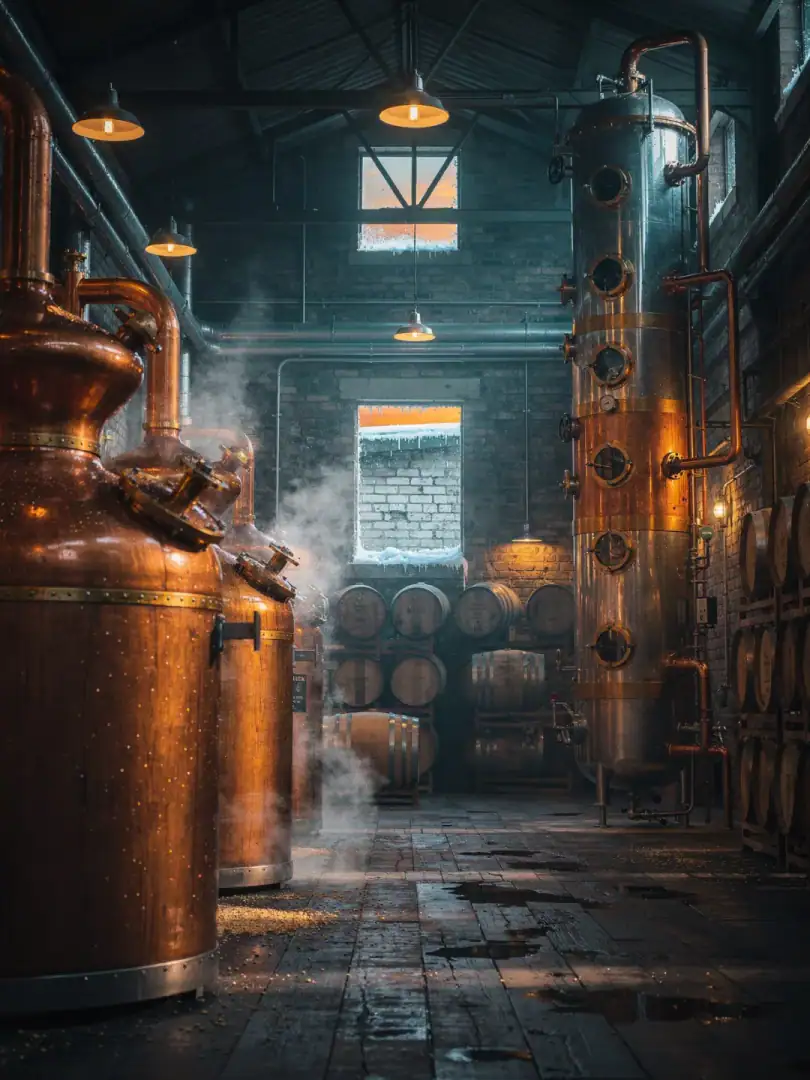
Column and Copper
Distillation & Rectification
"Distilleerketel 1" still stands today in the Nolet distillery, a coal-fired copper kettle once installed by Jacobus Nolet. It's the kettle the vodka is named after, the one Carolus Nolet introduced in 1983: Ketel One. Eleven generations of the Nolet family have carried the distillery forward to this day.
Behind that name lies a two-part distilling process. Part of the wheat distillate passes through columns to produce a very pure, nearly neutral raw spirit. Another part is distilled again, by hand, in a total of ten copper pot stills, including the old kettle number one. Only the blend of both parts creates the finished vodka.
Classic Schiedam genever is distilled quite differently. Rye and malted barley are triple-distilled to produce malt wine (moutwijn), a distillate with far more inherent flavor than the nearly flavorless vodka from the column. Genever gets its character before aging even begins, not from additions afterward. The malt wine then often ages for several years in oak casks.
During rectification, the cleaning of the raw spirit in the column, fusel compounds are removed while the alcohol content continues to rise. As everywhere in the EU, vodka must reach at least 37.5 percent alcohol by law. Ketel One and most vodkas from large distilleries sit well above that, at around 40 percent.
Two distilling methods, one kettle heritage. In Schiedam, the column and the copper pot still don't compete, they've shared the same waterside property for decades. Both processes still run today just a few meters apart.