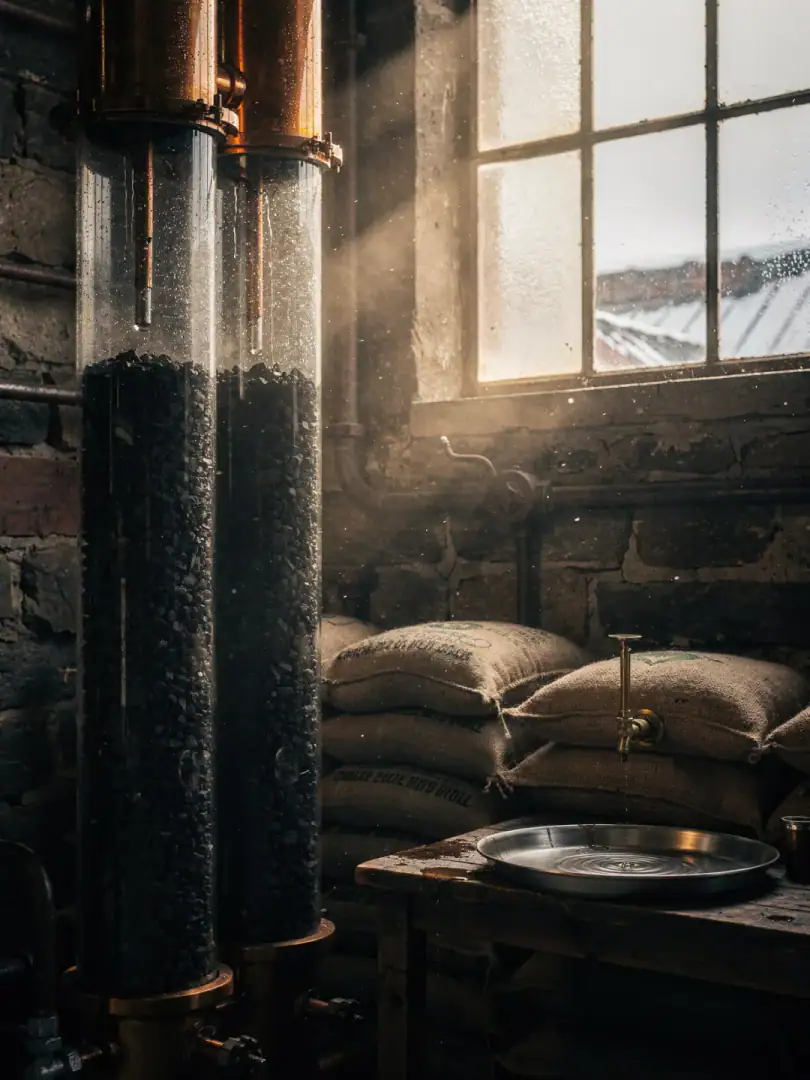
Charcoal in the Kettle
Filtration
A vodka should taste neutral, while a genever should taste like exactly the opposite, which is why the two are treated so differently after distillation in Schiedam. This decision is made early in the production process, long before bottling.
After distillation, Ketel One is filtered over loose charcoal. The vodka then rests in tiled tanks until it's ready to drink. This resting period smooths out the flavor once more before bottling. The charcoal binds fusel compounds and flavor residues that would otherwise stand in the way of a clean vodka. The goal is a soft taste that draws as little attention to itself as possible.
With genever, that's not the goal at all. The malt wine, the robust grain distillate made from rye and malted barley, is barely filtered. Its malty aroma is meant to be preserved, and even deepened further during aging in oak casks. A seal of authenticity issued by the municipality of Schiedam since 1902 still guarantees the origin of the malt wine today.
There's no marketing promise behind this filtration, just a technical decision that depends on the goal. Those who want neutrality filter heavily. Those who want character filter little or not at all. This simple principle is often missing from the glossy brochures of many distilleries. It also explains why genever tastes of grain while vodka usually doesn't.
So in the same part of town, two finished spirits sit side by side, distilled from similar grain. They share the raw material, but not the goal in the glass. Anyone who tastes both side by side will notice the difference immediately and unmistakably.