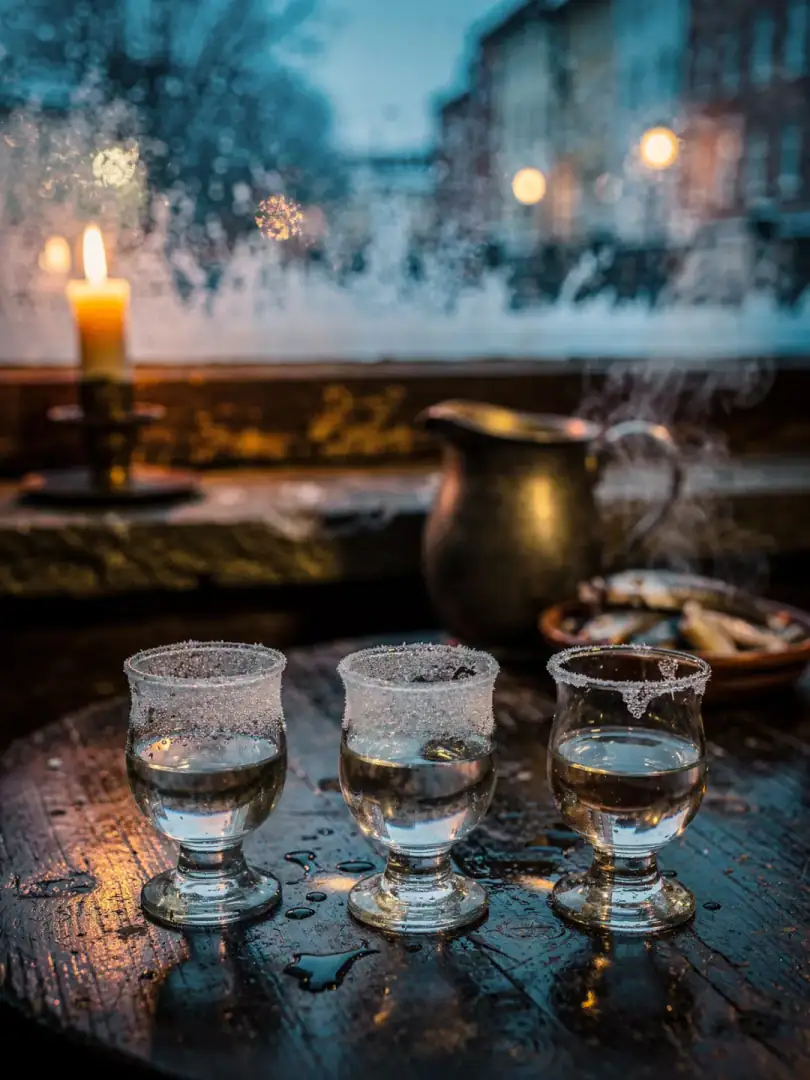
Kopstootje and Cold
Drinking Culture
Don't reach for it right away, that's often the first thing guests hear in a Schiedam proeflokaal when their glass of genever arrives. The tulip-shaped glass is filled right to the brim, and lifting it means spilling some. This is how many people have their first encounter with the city's signature drink.
So the first sip is taken without hands. You lean over the bar and clasp your hands behind your back, then sip from the very top of the glass. Only after that are you allowed to pick it up.
Anyone who orders a cold beer alongside their genever is drinking what's called a kopstootje, literally a little head-butt. The beer follows shortly after the genever and rounds off the sharpness of the grain spirit. This combination is common in pubs across the whole country, but in Schiedam it's already part of the city's history.
Not all genever is the same, though. Jonge genever contains little malt wine. It tastes lighter and works well as an aperitif before a meal. Oude genever brings more malt wine to the mix, tasting bolder and maltier, and is more often enjoyed as a digestif after eating. The difference between the two isn't age but the proportion of grain distillate. Both styles come from the same malt wine, only the ratio differs.
Vodka knows hardly any of these rituals, it's usually just drunk neat and cold, without a bow and without a beer chaser. Both spirits share the same copper-kettle heritage, yet their drinking cultures could hardly be more different.