Pelmeni & Stroganina
Vodka & Food
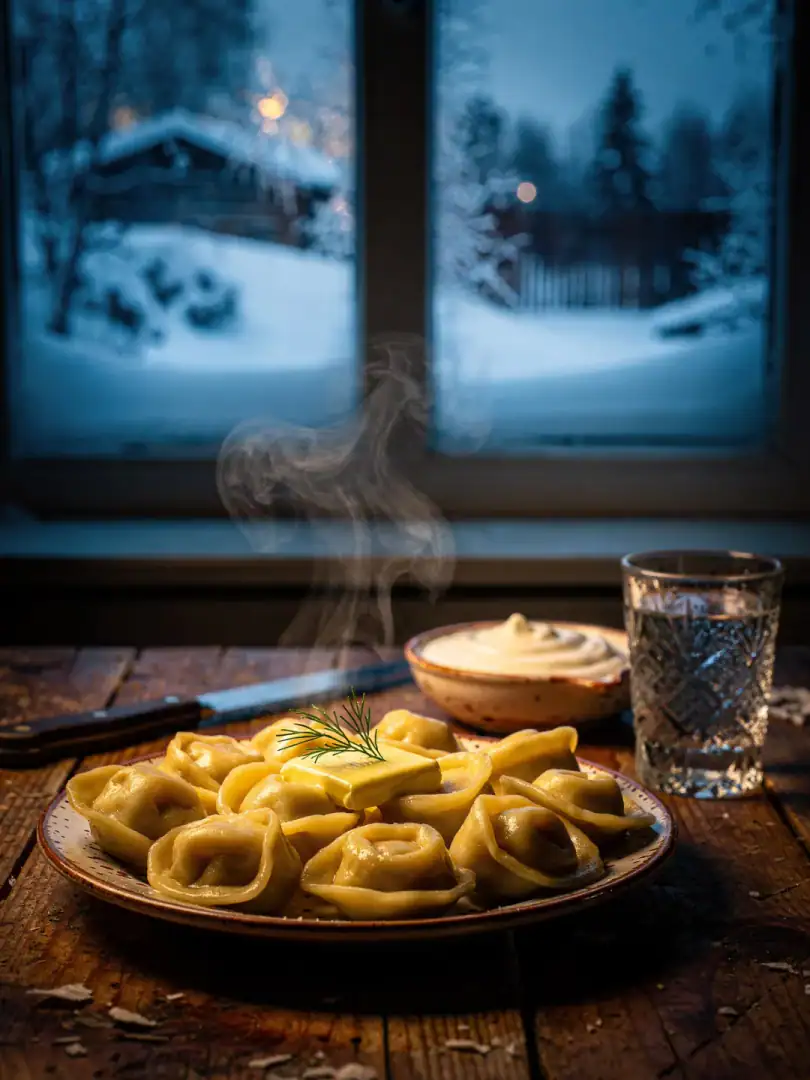
Few dishes sound as Siberian as Pelmeni. The name comes from the Finno-Ugric languages Komi and Udmurt. It literally means bread ear, after the shape of the filled dumplings.
They likely arrived in the Urals and further into Siberia through Mongol influence. There, they proved ideal for the long winters. Frozen outdoors, hundreds could be made at once and stored for months, letting hunters or travelers cook them on the go.
Stroganina is served even colder. These are paper-thin shavings of completely frozen fish, usually nelma or white salmon from Siberian rivers. The name comes from the Russian word strogat, meaning to shave or plane, exactly what's done to the frozen fish block.
A glass of ice-cold, clear vodka traditionally accompanies both dishes. An old Siberian saying goes that only sled dogs eat stroganina without vodka, a sign of just how tightly food and drink are bound together here.
The neutral, cold vodka doesn't interfere with the delicate flavor of the stroganina. At the same time, it cuts through the fat in the Pelmeni filling without masking the spices in the dough. That's why both dishes are still rarely served without it.
Alongside Pelmeni and Stroganina, larger gatherings often feature a simple zakuski table, small bites meant to accompany the vodka. Pickled mushrooms and berries from the taiga sit alongside smoked omul, a whitefish from Lake Baikal. These bold, salty, and sour flavors pair well with a vodka that has almost no flavor of its own. They also help guests get through larger quantities over the course of a long evening.