The short answer
Your first home bar doesn't need a huge bottle collection. Choose two drinks you genuinely enjoy, buy their ingredients, and measure carefully when mixing. In your home bar, you'll then see which recipes match your stock and what's still missing for an evening with guests.
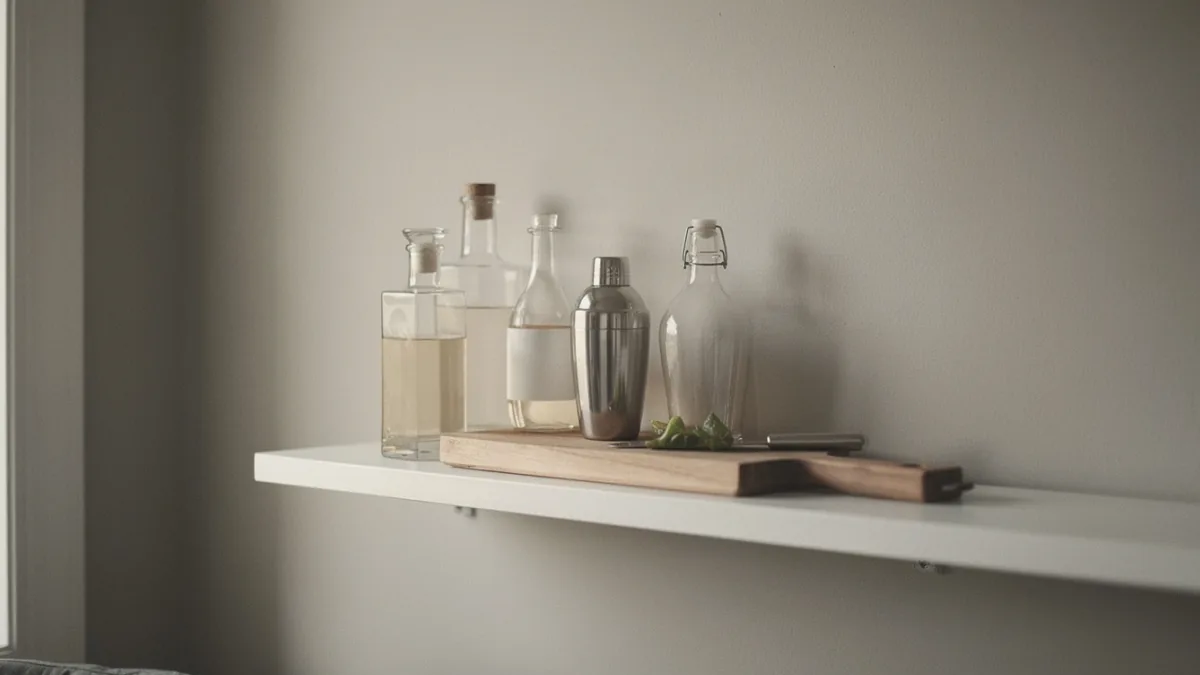
The Right Starter Setup in Five Minutes
Start with a single decision. Do you prefer fresh, tangy cocktails, bitter aperitifs, or soft, bold drinks? Then choose two recipes that share ingredients. With gin, a Gin Fizz and a Gin Basil Smash pair well together. With rum, it's the Daiquiri and the Mojito.
Read through both recipes completely before you shop. Fresh herbs, ice, and garnish are the most commonly forgotten items. They usually appear at the end of the ingredient list.
Then enter the ingredients you already have into your home bar. A match means the ingredients for that recipe fit your selection. The home bar doesn't know how much is left in the bottle. Ice, clean equipment, and garnish remain your own preparation step.
The shopping list totals the overall requirements for your chosen servings. Subtract whatever you already have at home yourself.
Three Stages for Your Shopping Trip
These stages show how few bottles you need for two good drinks. This isn't a mandatory sequence. You can start straight away with the rum variation or stick with your two favorite drinks. An extra bottle only pays off once you actually want to mix the drinks it makes possible.
Buy perishables to match your planned occasion. A large bunch of herbs or an opened bottle of vermouth isn't a good stock if both then sit unused for weeks. Small package sizes are often smarter than the lowest price per liter for rarely used ingredients.
| Equipment | Shopping | Getting Started |
|---|---|---|
| Small: A Fresh Gin Starter | Dry gin, lemons, sugar syrup, soda; basil as an addition | Gin Fizz; with basil, a Gin Basil Smash |
| Extended: Bitter Aperitifs | Also Campari and sweet red vermouth; oranges for garnish | Negroni and Americano |
| Versatile: A Second Spirit Family | Also white Cuban rum, limes, white cane sugar, and mint | Daiquiri and Mojito |
The Equipment You Actually Need
The most important tool is a measuring jigger with an easy-to-read milliliter scale. Add to that a suitable cocktail shaker, a strainer, a citrus juicer, a long-handled bar spoon, plus a knife and cutting board. A fine kitchen sieve helps with herbs or fruit pulp. For stirred drinks, a sturdy, sufficiently large mixing glass will do to start.
When it comes to glassware, you don't need a separate model for every recipe. Three shapes cover a lot of ground: a short glass for drinks on ice, a tall one for long drinks, and a small stemmed glass for strained cocktails. Pay attention to capacity. The drink, including the ice, needs to fit inside.
A very large glass doesn't automatically make a small recipe portion the right fill amount. The drink will just look lost in it.
Shaking requires a shaker that seals securely. Carbonated ingredients should only be added afterward, otherwise pressure builds up inside the shaker. Any random screw-top jar is not an equivalent substitute. Glass quality, temperature changes, and a tight-fitting lid quickly become a problem.
A Reliable Process for Your First Cocktail
Read through the ingredients, preparation, and garnish once from start to finish. Then set everything out. Freshly squeeze citrus fruits. Pre-chill the serving glass if the drink is served without ice.
Measure the ingredients. Pouring by eye straight from the bottle is the most common reason for a drink gone wrong. Add the ice only once you're actually ready to start mixing. Otherwise it melts beforehand and waters down the drink.
Follow one version of the recipe exactly at first. Shake or stir as instructed, then strain. Carbonation, delicate garnishes, and any floated wine are added at the point specified.
If something doesn't taste right, change only one single variable on your next attempt. Write it down. That's the only way you'll know afterward whether less syrup, a different spirit, or longer chilling made the improvement.
The Drink Doesn't Taste Right: Targeted Fixes
More alcohol won't rescue a cocktail gone wrong. Usually, the acidity and sweetness just don't match. Sometimes the ingredients were simply too warm. And sometimes the product you used differs significantly from what the recipe assumes.
Also check the units. 2 cl is 20 ml. A dash, on the other hand, isn't a reliable milliliter measurement, since every bottle pours differently.
Test changes on a small amount first. If you keep adding more sugar, acid, and spirit, the drink just grows larger. You'll no longer be able to track its balance. Write down your successful version with exact amounts.
The most common complaints each have an obvious cause and a small fix.
| Impression | Check First | Next Attempt |
|---|---|---|
| Too Sour | Freshness and amount of juice; syrup concentration | Adjust the syrup in small steps |
| Too Sweet | Sweetened juice, liqueur, and syrup combined | Carefully reduce one source of sweetness |
| Warm or Harsh | Pre-chilled glass, enough fresh ice | Properly execute chilling and dilution |
| Watery | Wet, already-melting ice; waiting time | Use fresh ice and serve immediately |
Organizing Syrup and Stock Properly
Our simple sugar syrup consists of equal parts by weight of sugar and water. For example, stir 100 g of sugar with 100 g of water until the sugar dissolves. This doesn't simply turn into 200 ml of syrup. Weigh the ingredients when making it, and measure the finished liquid according to the recipe when mixing.
Pour the syrup into a clean container, note the date it was made, and store it chilled. It's better to make small batches. A blanket shelf-life claim wouldn't be reliable without a defined process.
Vermouth and other wine-based ingredients belong in the refrigerator, tightly sealed, after opening. They are wines. Store spirits sealed, upright, and protected from sunlight and heat.
For cream, egg, juices, and ready-made mixers, follow the respective storage instructions. For recipes involving egg, we use pasteurized egg products. Follow their quantity and refrigeration guidelines.
Planning for Guests Without Spending the Whole Evening Behind the Shaker
Two well-prepared cocktails and one alcohol-free alternative go further than a huge menu. Ask beforehand about preferences and intolerances.
In the guest planner, enter the actual planned number of servings for each drink. One person isn't automatically a fixed number of drinks.
The combined list totals up the compatible amounts. Entries like top up remain open, since the amount needed depends on the glass and the ice. The planner lists garnishes separately. It doesn't convert juice amounts into a seemingly exact number of lemons or limes, since the yield varies from fruit to fruit.
Prepare glasses, garnishes, and your work surface. Mix shaken drinks in appropriately sized individual batches. Double the ingredient amount doesn't fit in the same shaker load, and it doesn't need double the shaking time either. Keep carbonation separate until serving.
Plan for water and an alcohol-free selection just as visibly as for the cocktails.
Your Next Steps
Mix one recipe reliably first before comparing many variations. Note the ingredients, amounts, and one sentence about the result. Only then decide which additional ingredient genuinely opens up a new drink for you.
The home bar's one more ingredient suggestion shows you exactly these expansions. It calculates based on what you've already entered.
If you'd like to get to know an entire spirit family better, our gin, rum, and whisky guides can help. They focus on flavor and practical use, not on owning as many bottles as possible.