Smelt and Zakuski
Vodka & Food
In spring, the Neva smells of fresh cucumber for a few weeks. The scent comes from koryushka, the Neva smelt. The small fish swims upstream in shoals from the Gulf of Finland at exactly this time to spawn, giving off a strikingly fresh, almost herbal aroma that the city's fishermen and cooks have known for generations.
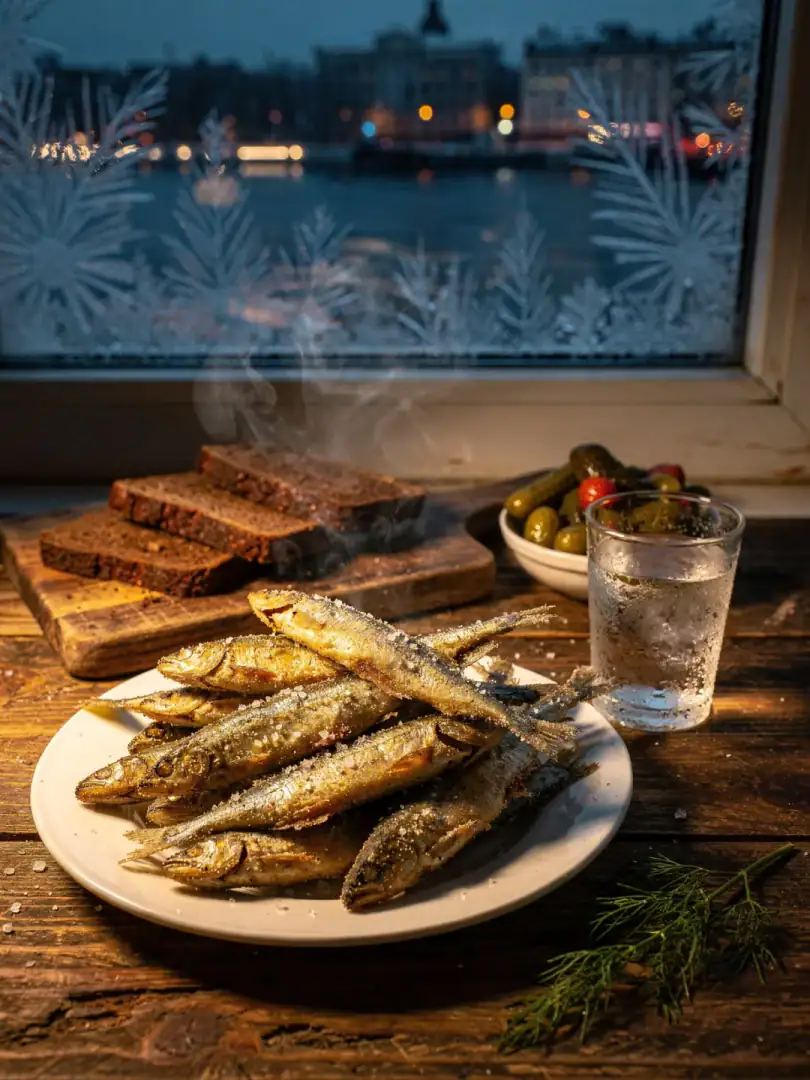
The catch is traditionally prepared simply: lightly dusted in flour and fried crisp in hot fat. Sprinkled with salt and sometimes a little dill, the fish needs nothing more. During the height of the run, the city still celebrates its own Koryushka Festival, where the freshly fried fish is sold right by the river.
Ice-cold vodka pairs better with the crisp, lightly oily fish than any other drink. The chill and clarity of the vodka cut through the fat in the mouth rather than blending with it. Many in the city consider this combination of cold high-proof spirit and warm, freshly fried fish one of the few truly local vodka-and-food pairings.
Outside smelt season, the table is rarely bare regardless. Pickled cucumbers, dark rye bread, and salted herring form the basic makeup of any zakuski spread. Often there's a spoonful of sour cream or a bit of horseradish too, which absorbs the sharpness of the vodka rather than intensifying it. Unlike the vodka itself, these simple ingredients mostly come from right around the city, from its gardens and rivers.
In the end, the same pattern emerges at the table as once did at the tsar's court. Cold, clear spirit and simple, hearty bites complement each other, because neither one alone can carry the evening. The fish from the Neva and the water from Ladoga end up meeting, quite literally, on the very same plate.