Echpochmak & Salt
Vodka & Food
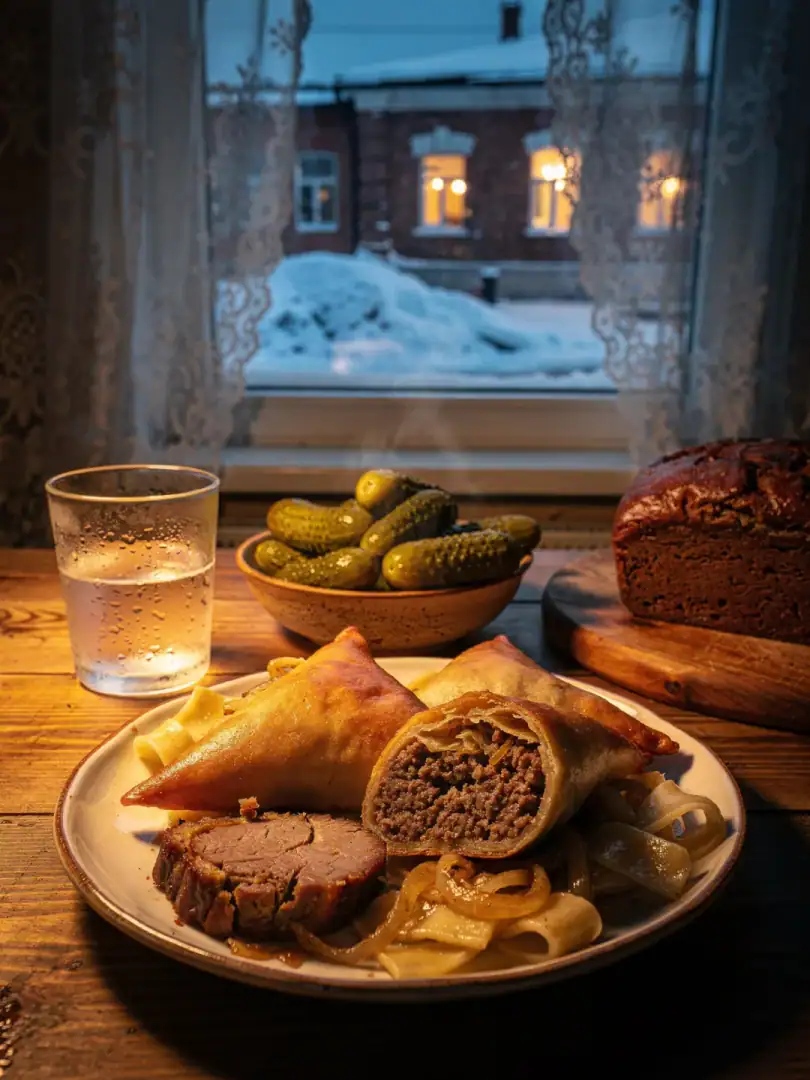
Raw meat and potato filling goes into a triangularly folded piece of dough. During baking, it cooks through with broth poured in via a small opening. This is how Echpochmak comes together, one of the best-known dishes of Tatar cuisine. The name literally means "three corners," describing its distinctive shape.
Boiled meat, wide noodles, and a broth with onions come together as Kullama, traditionally served on special occasions. Its high fat content calls for a drink that clears the palate in between bites. A cleanly filtered wheat vodka suits it well, not as a strict rule, but as a natural choice.
Chak-Chak is a different matter altogether: a sweet pastry of fried dough pieces in honey syrup. It appears at every celebration, whether alcohol is on the table or not. Its sweetness would overwhelm a dry vodka rather than complement it. Traditionally, it's served with tea instead of anything high-proof.
In Russian-influenced households in the region, the vodka table tends to come with pickled cucumbers, sauerkraut, and herring. These simple zakuski serve one main purpose: to soften the effect of the alcohol without stealing the spotlight themselves. They cost little, come together quickly, and pair with almost any vodka from the region.
So the same tables across the region often carry two culinary traditions side by side. One is Tatar-Bashkir, built around Echpochmak and Kullama. The other is Slavic, built around zakuski with vodka. Together, in their own ways, they tell the story of how people eat and drink in the Volga-Ural region.