Republic & Conglomerate
Region & History
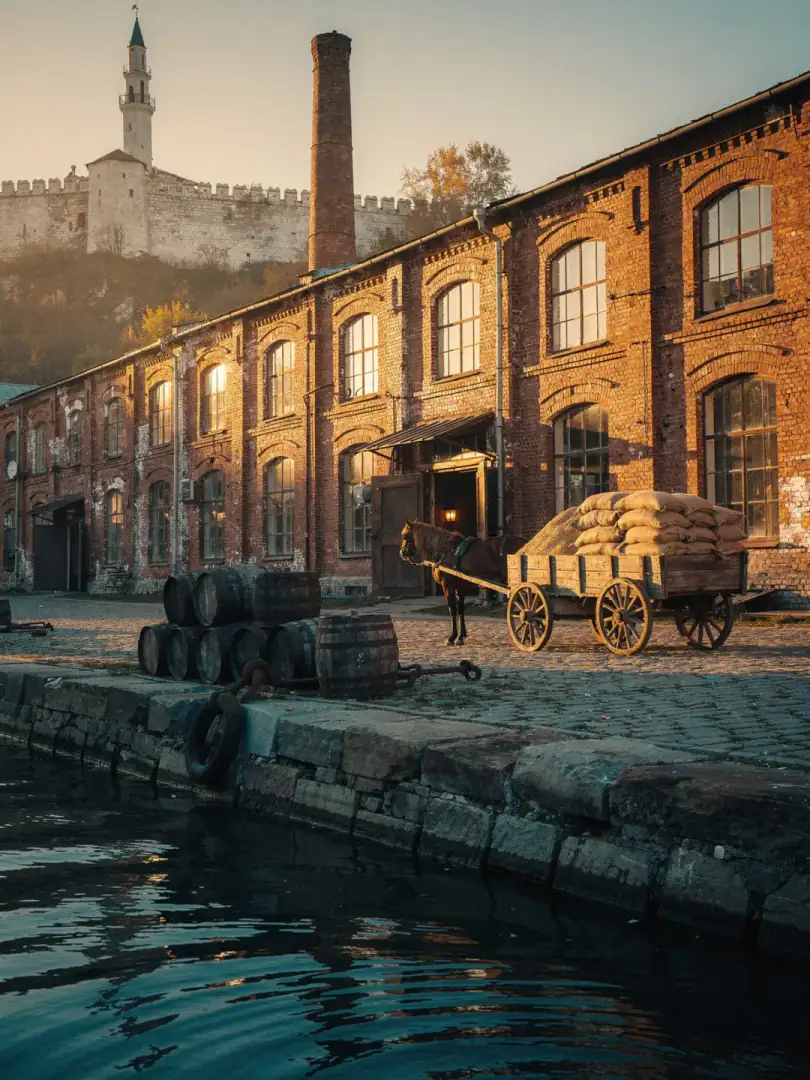
On the banks of the Kama, just a few kilometers from where the river meets the Volga, distilling has been practiced for centuries. Travelers mentioned Kazan vodka as early as 1599, long before the name Tatarstan existed. In the 19th century, "Pennik" was the city's best-known spirit, a roughly fifty-percent distillate filtered through linden charcoal rather than the birch charcoal that is standard today.
During the Soviet era, the distilleries belonged to the state, as they did everywhere in the country. After 1991, the local principle survived: in 1997, the government of the Republic of Tatarstan issued a decree founding the holding company Tatspirtprom, bundling together two alcohol plants, two liquor-vodka factories, a winery, and its own distribution network. Unlike in many Russian regions, the alcohol sector here remained in state hands, but hands belonging to the republic itself.
The rise paid off. According to the business newspaper Kommersant, Tatspirtprom took the top spot among Russia's vodka producers in 2024 and defended it for a second consecutive year in 2025. The conglomerate produced roughly 13.2 million decaliters of alcohol in 2025, more than any other company in the country.
Success in Kazan drew attention in Moscow. In late December 2025, Russia's antitrust authority, the FAS, approved the purchase of all shares by the state-owned conglomerate Rosspirtprom. After nearly thirty years as republic property, Tatarstan's largest distillery is passing into federal hands, a shift local press openly described as the sale of an alcohol holding.
Bashkortostan took a similar path, only earlier and on a smaller scale. As far back as the 18th century, estate owners distilled their own spirits on their lands; by the late 1920s, the Soviet administration had consolidated these operations into Bashkir Spirtprom. The year 2000 brought the current structure: the republic's cabinet founded the state enterprise Bashspirt, uniting seven factories, including the plants in Belebey, Ishimbay, and Birsk, under one roof.