Wheat & Black Earth
Raw Material
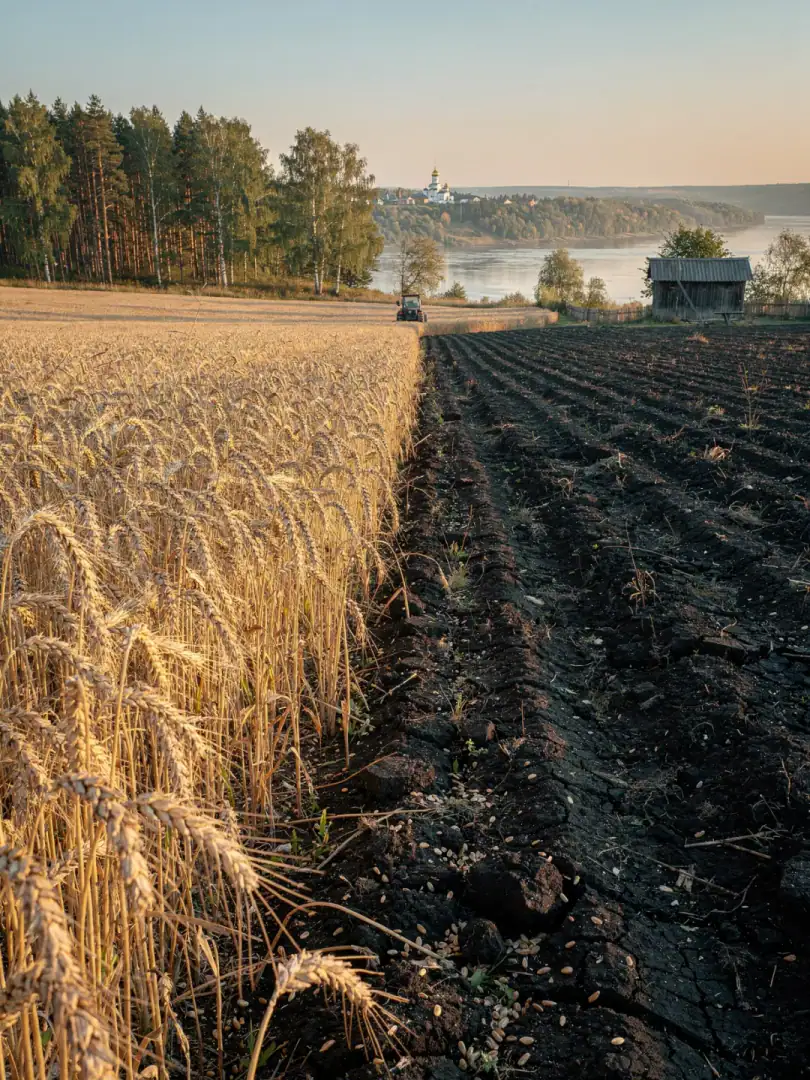
Two grain types share the fields between the Kama and the Urals. In the south, wheat grows on black earth (chernozem); further north toward the Kama's mouth, rye is more common on grey forest soils. For its "Lyuks" and "Alfa" spirit grades, Tatspirtprom says it relies on hard wheat varieties. These come from the areas surrounding the company's two in-house alcohol plants in Ussady and Mamadysh.
The soil makes the difference. Black earth stores moisture over winter and releases it to young seedlings in spring, producing plump, starch-rich kernels. Further north, the soil turns paler and more acidic, favoring tougher rye. It still yields a harvest even in lean years.
Even in the era of the Khanate of Kazan, large quantities of grain moved along the Volga. The city sat on one of the most important trade routes between north and south. That position endures to this day. Grain from the surrounding countryside still reaches the region's distilleries via the Volga and Kama; there are hardly any shorter routes.
This matters for flavor. A vodka made from hard Volga wheat often comes across rounder and slightly sweet. Rye from the region's more northerly stretches, by contrast, tastes sharper and spicier. Producers rarely state openly which grain ends up in the bottle; labels usually just read "grain distillate."
In Bashkortostan, the picture grows more mixed still. Closer to the Urals, stonier, thinner soils dominate, supporting hardier rye and barley alongside wheat. The four liquor-vodka plants of the Bashspirt holding therefore source their grain from several districts across the republic, not from a single breadbasket.
Humus-rich, dark farmland soil common in the Kama valley and southern Bashkortostan.
The root: Here wheat draws nitrogen and minerals for plump, starch-rich kernels.