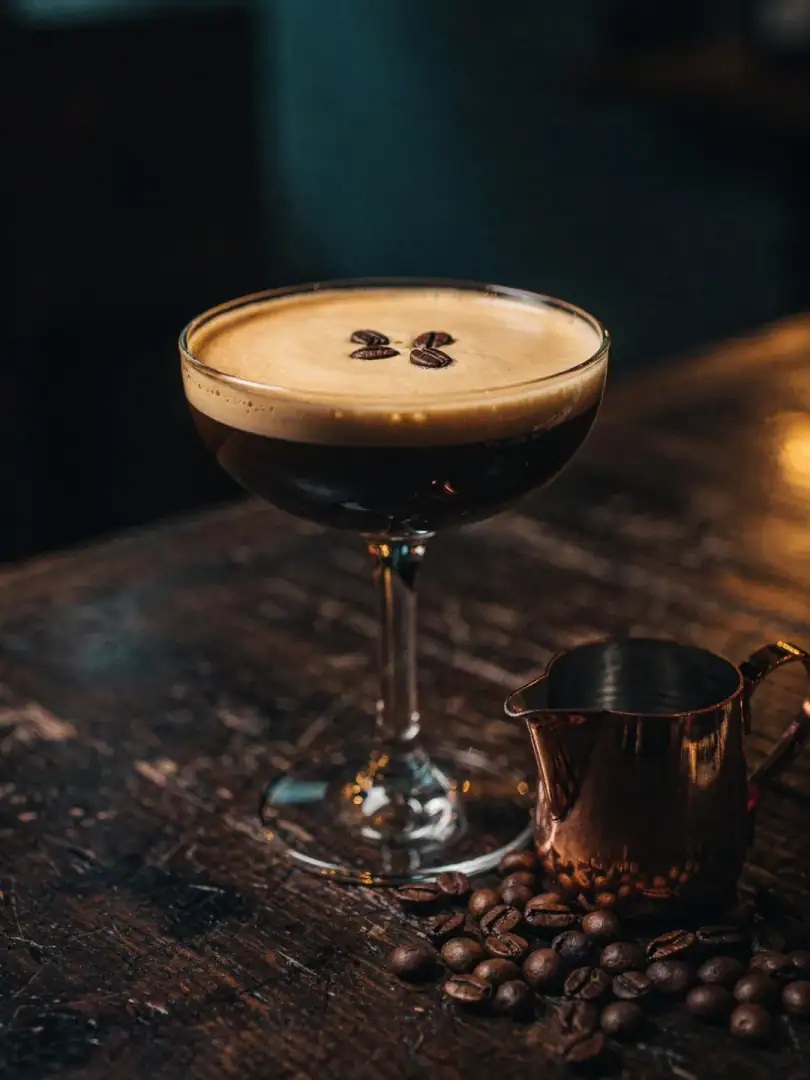
Coffee with a kick
Espresso Martini
The Espresso Martini combines vodka with fresh espresso and coffee liqueur and only came into being in 1983 in London. Despite its name, it has nothing in common with a classic martini beyond the glass. This station shows its history and the recipe for achieving that signature crema.
How the Espresso Martini came about in 1983
British bartender Dick Bradsell is credited as the inventor of the Espresso Martini. According to legend, a model at a London bar asked him for a drink that would wake her up and get her drunk at the same time. Bradsell responded by mixing vodka, freshly brewed espresso, coffee liqueur, and a little sugar syrup, then shaking it all vigorously with ice.
Bradsell originally named his creation simply 'Vodka Espresso'. Only later did the now-common name Espresso Martini take hold, even though the drink uses neither vermouth nor the classic martini technique. All that remains is the shape: it's served in the typical martini glass.
Why vigorous shaking is essential here
Unlike the Vodka Martini, the Espresso Martini specifically depends on especially vigorous, prolonged shaking. This is what creates the fine, light-brown crema on the surface that visually sets the drink apart from other coffee cocktails. The foam comes entirely from the natural oils in the espresso, with no cream or egg white involved.
If shaken only briefly, the foam layer stays thin and disappears quickly, leaving the drink looking rather flat. Bartenders therefore often shake noticeably longer than they would for other cocktails, sometimes twelve to fifteen seconds straight, until a stable layer visibly forms on the surface.
The recipe in cl
An Espresso Martini calls for 5 cl vodka, 2 cl coffee liqueur, and 3 cl freshly brewed, cooled espresso, shaken very vigorously in a shaker with plenty of ice. For a sweeter version, add half a centiliter of sugar syrup. The mixture is then strained through a fine strainer into a chilled martini glass.
The classic garnish is three whole coffee beans floating in the center of the foam. They symbolize health, wealth, and happiness, an old bar tradition many guests still recognize today. It's important to use freshly brewed, already cooled espresso, since hot coffee melts the ice in the shaker too quickly.
A drink for late in the evening
The Espresso Martini is often ordered toward the end of an evening, when an after-dinner espresso and one last cocktail would otherwise be competing choices. The drink resolves this conflict by combining both in one glass, caffeine and alcohol at once.
In the 2010s and 2020s, the Espresso Martini experienced a genuine revival and is now among the most-ordered cocktails worldwide. Many bars today offer their own variations, such as with caramel syrup or flavored coffee liqueur, without changing the basic structure of vodka, espresso, and coffee liqueur.
Espresso Martini without an espresso machine
Not every home bar has an espresso machine, but the drink can still be mixed at home. Strong, cold-brewed filter coffee or instant espresso powder dissolved in a little hot water can largely replace classic espresso, as long as the amount is right and the coffee is strong enough.
In any case, it's important that the coffee goes into the shaker cold, so the ice doesn't melt prematurely and leave the drink too watery in the end. Anyone who mixes Espresso Martinis regularly will still benefit from a small portafilter or pod machine, since fresh espresso noticeably delivers more foam and aroma.
Those who want to skip caffeine late in the evening can use decaffeinated espresso without any noticeable change in flavor or foam. Skimping on the espresso itself, however, say by using heavily diluted filter coffee, noticeably weakens both the flavor and the characteristic crema. The choice of coffee liqueur also affects foam formation: a thicker, sweeter liqueur usually stabilizes the foam a bit longer than a thin, dry variety.