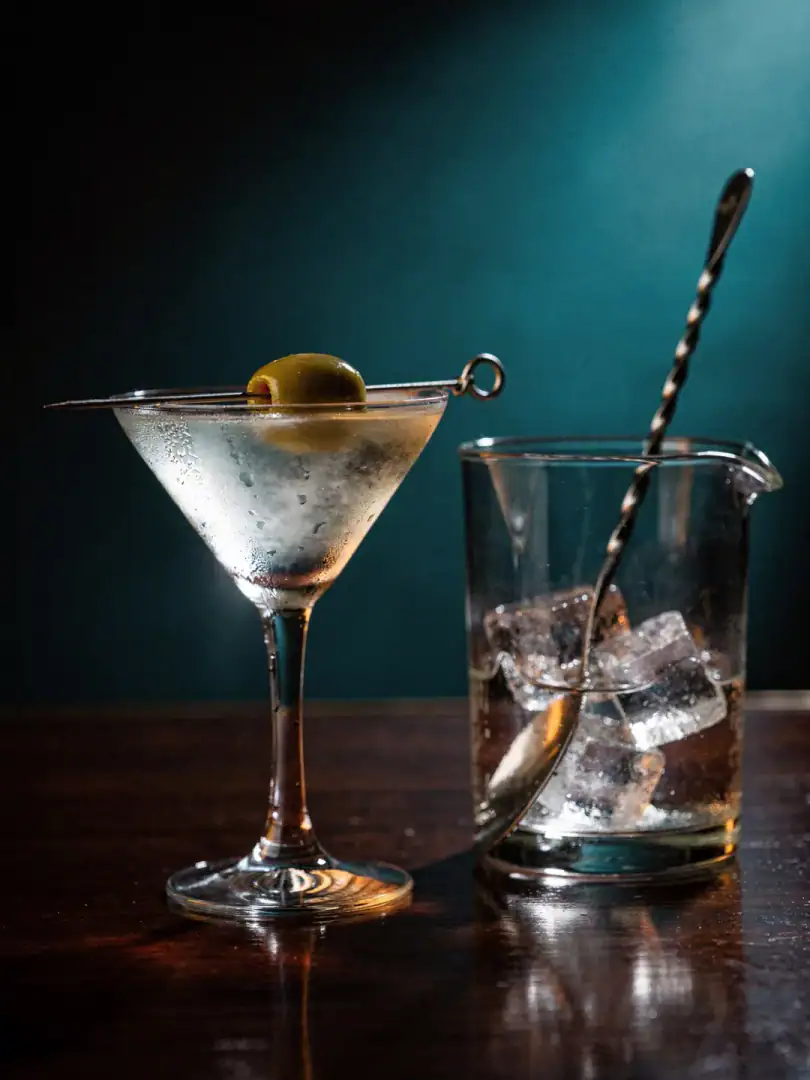
Shaken or stirred
Vodka Martini
No cocktail debate is as famous as the question of whether a martini should be shaken or stirred. The Vodka Martini replaces the gin in a classic Martini with vodka and became world-famous largely thanks to James Bond. This station explains its origin, the key difference, and the right ratio.
From the Gin Martini to the Vodka Martini
Since the late 19th century, a mix of gin and dry vermouth has been considered the classic martini. Vodka as a substitute for gin only became popular in the mid-20th century, as the spirit grew increasingly well-known in the USA following successes like the Moscow Mule. Vodka offered a noticeably milder, more neutral flavor than the herb-forward gin.
For many drinkers, this was an advantage: the vermouth and garnish could stand out more clearly without competing with the gin's juniper character. The Vodka Martini thus established itself as its own, equally respected variation alongside the classic Gin Martini, without ever fully replacing it.
James Bond and the line 'shaken, not stirred'
Few cocktails are as closely tied to a film character as the martini is to James Bond. In Ian Fleming's novels and the later films, Bond regularly orders his vodka martini with the addition 'shaken, not stirred'. The line became one of the most famous quotes in all of pop culture and shaped how many people first came to know the drink.
Among bartenders, however, Bond's order is considered unusual, since a pure spirit drink without juice or syrup is traditionally stirred, not shaken. Why Bond specifically preferred shaking remains fiction, but the line still influences how guests order their martini in bars today.
Why stirring is the classic technique
When stirred with ice in a mixing glass, the drink cools about as much as it would when shaken, but takes on noticeably less air and stays clear rather than cloudy. For a drink made almost entirely of spirits, this matters, since clarity and a silky texture are part of what a martini is meant to look like.
Shaking, on the other hand, creates fine ice shards and tiny air bubbles that leave the drink briefly cloudy and slightly frothy. In cocktails with juice this barely matters, but in an almost transparent martini it's quite noticeable. That's why most bartenders stir a Vodka Martini today, regardless of what Bond orders on screen.
The recipe in cl and the question of vermouth
A Vodka Martini calls for 6 cl vodka and about 1 cl dry vermouth, stirred in a mixing glass with plenty of ice for about 20 to 30 seconds, then strained into a chilled martini glass. Those who prefer a 'dry' martini reduce the vermouth further, while those who like it 'wet' increase the proportion slightly.
The classic garnish is a green olive or a strip of lemon peel, twisted over the glass to release its essential oils. Both options noticeably change the aroma: the olive adds a salty note, while the lemon peel gives a fresher, slightly more bitter finish.
Dirty Martini & Co.: relatives, not copies
Over the years, the Vodka Martini has given rise to its own variations. The Dirty Martini adds a splash of olive brine, making the drink saltier and cloudier. The Dry Martini leaves out the vermouth almost entirely, leaving behind little more than pure, well-chilled vodka.
The Espresso Martini shares the name in its title, but technically belongs in its own category, since it's shaken rather than stirred and uses completely different ingredients. 'Martini' has come to describe more the glass and the short ingredient list than any fixed recipe.