Potato, Grape, Maple
Tasting
Taste American craft vodkas side by side, and you'll quickly notice how much the raw material comes through, even though the law long forbade it. Potato vodka from Idaho often feels rounder and slightly creamy on the palate, with a subtle earthy sweetness lingering in the finish. In every case, the color stays crystal clear, as the US standard for vodka requires.
Hangar 1 from Alameda brings a floral, almost perfumed note through its Viognier grapes, closer to a grappa than a classic vodka. Vermont Gold Vodka, according to the distillery, is distilled from pure maple sap and water. The maker describes notes of white pepper, toasted wood, and a light caramel sweetness. Such claims come from the distillery itself and aren't independently verified by a neutral third party.
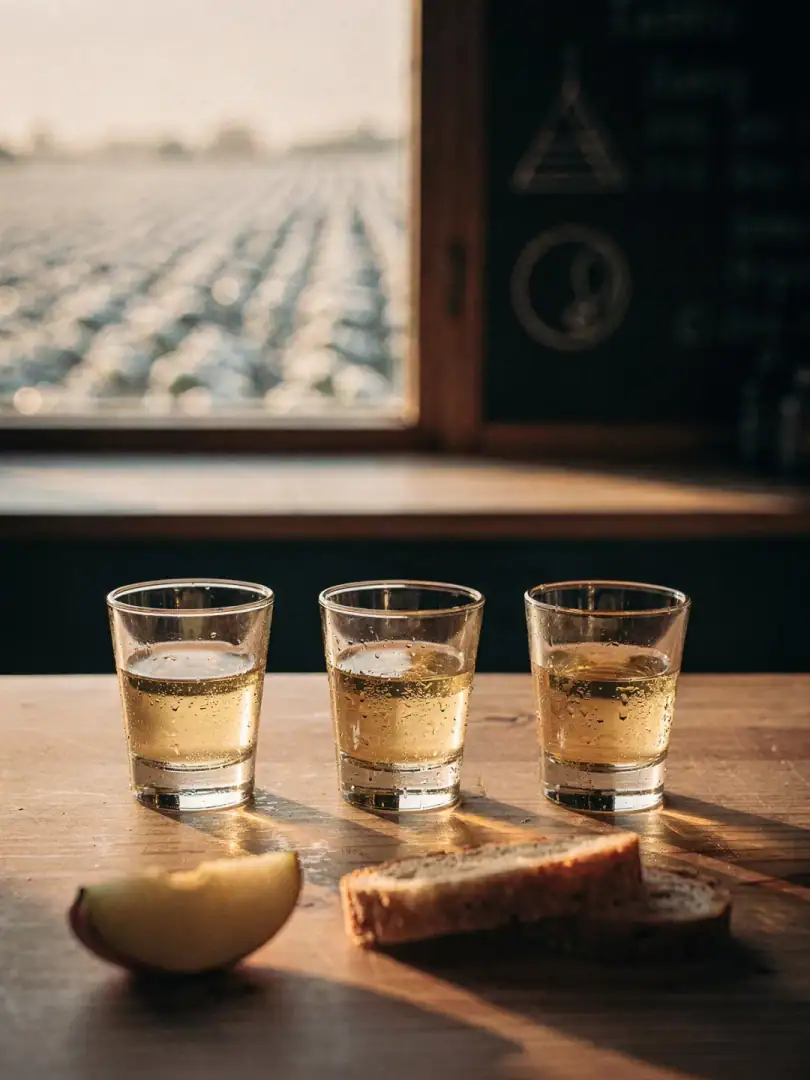
A simple routine helps with tasting. Swirl the glass gently, take a quick sniff, then let a small sip spread across your mouth before swallowing. Between samples, a neutral bite, like a piece of bread, is worthwhile. A glass of water in between also helps reset the palate, so the next vodka isn't overshadowed by the last.
Temperature changes the impression significantly. Well chilled, all three vodkas taste smoother and more understated. At room temperature, raw-material notes like potato sweetness or grape blossom come through more clearly. That's exactly why experts often taste vodka slightly warmer, not ice-cold straight from the freezer. 'Room temperature' here usually means just above zero degrees Celsius, straight from the fridge, not actual room temperature as with wine.