Cool and Slow
Yeast & Fermentation
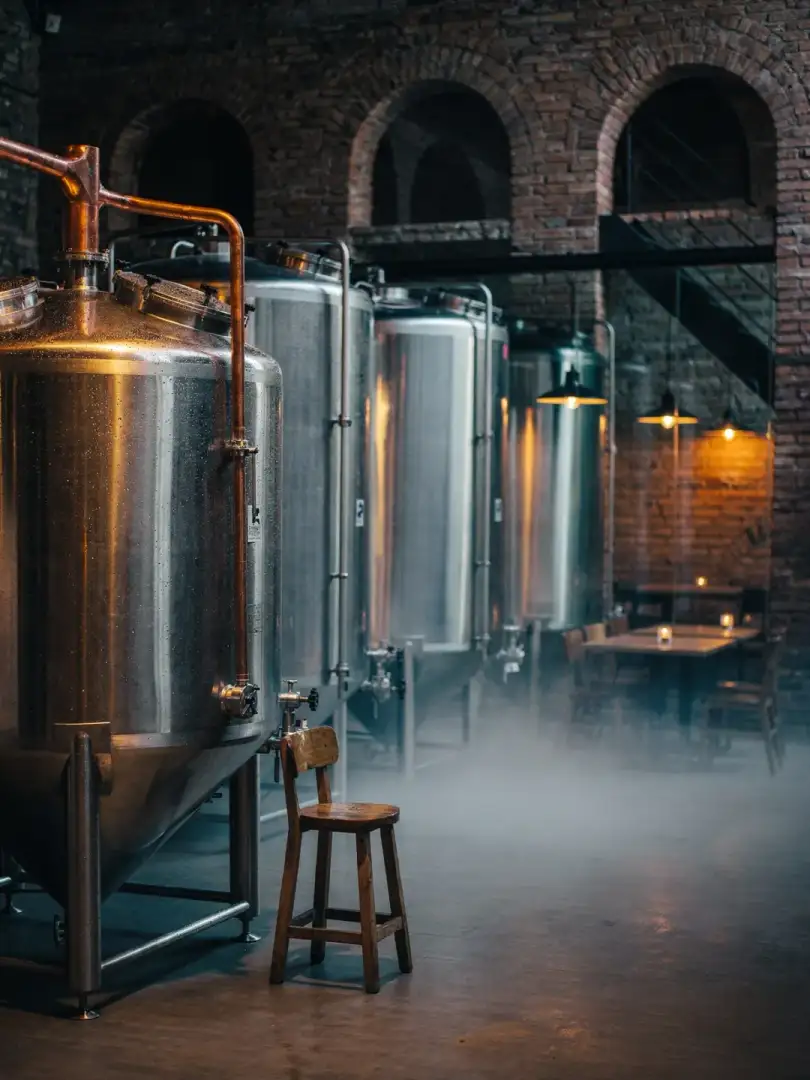
In the great fermentation cellars on the outskirts of Buenos Aires stand stainless steel tanks as tall as houses. Here Quilmes ferments with bottom-fermenting yeast. It works at low temperatures, at the bottom of the tank, and produces a clean beer without fruity side notes.
Fermentation takes a few days, followed by lagering. The beer rests at just a few degrees above freezing, the yeast settles out, and sulfur notes and other young-beer aromas fade away. The word lager comes from this very process of storing, and anyone in a hurry is least inclined to skimp here.
It's different in the small breweries of Palermo. An American Pale Ale or a Kölsch-style beer ferments with top-fermenting yeast, which prefers warmer conditions. This produces fruit esters perceived as pear, apple, or orange, and fermentation is over more quickly.
In some brewpubs the gleaming fermentation tanks stand behind glass right in the dining room. You can see where the beer comes from while you eat. This is less of a show than it looks, since at small volumes a separate room for the cellar isn't worth the cost.
Whether top- or bottom-fermented: in the end the beer is carbonated and packaged. For the big lager this happens filtered and pasteurized, so it keeps for months; for smaller breweries it's often unfiltered and fresh, meant to be drunk sooner. This also explains why a freshly poured pale ale at the bar often tastes noticeably livelier than one from the bottle.