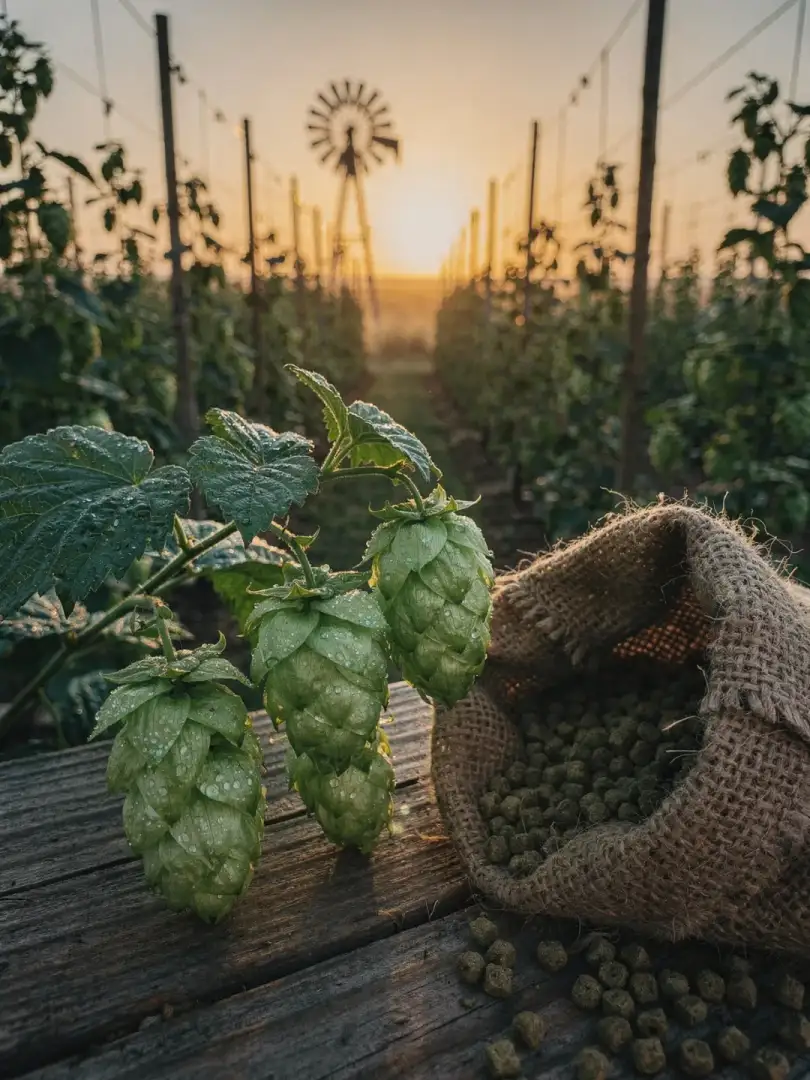
Imported Hops
Hops
Hops don't grow in greater Buenos Aires. The plant needs cool nights and long summer days, and those are found in Argentina only much further south. Anyone brewing in the capital therefore sources hops either from elsewhere in the country or from abroad.
Many brewers in Buenos Aires import American, German, or New Zealand varieties. This comes down to selection: Cascade and Citra from the US deliver citrus and grapefruit, the noble German varieties bring spice and herbs, and the New Zealand varieties often tropical fruit.
Hops serve two purposes. As bittering hops, they go into the boil early and give the beer its bitterness, measured in IBU, International Bitterness Units. As aroma hops, they're added late, or even placed in the tank after fermentation, a technique called dry hopping. This preserves the aroma without making the beer more bitter.
The big lagers like Quilmes Cristal rely on little hopping. The bitterness of an International Pale Lager, per BJCP guidelines, falls only between 18 and 25 IBU. An American Pale Ale, by contrast, ranges from 30 to 50 IBU and smells distinctly of fruit.
For the corner pub, this means: the lager in your chopp tastes above all of malt and cold, the pale ale in your pinta of hops. The city's brewers choose their hop blend according to style, and procurement depends on the world market, not a field down the road.