River & Pampa
Water & Soil
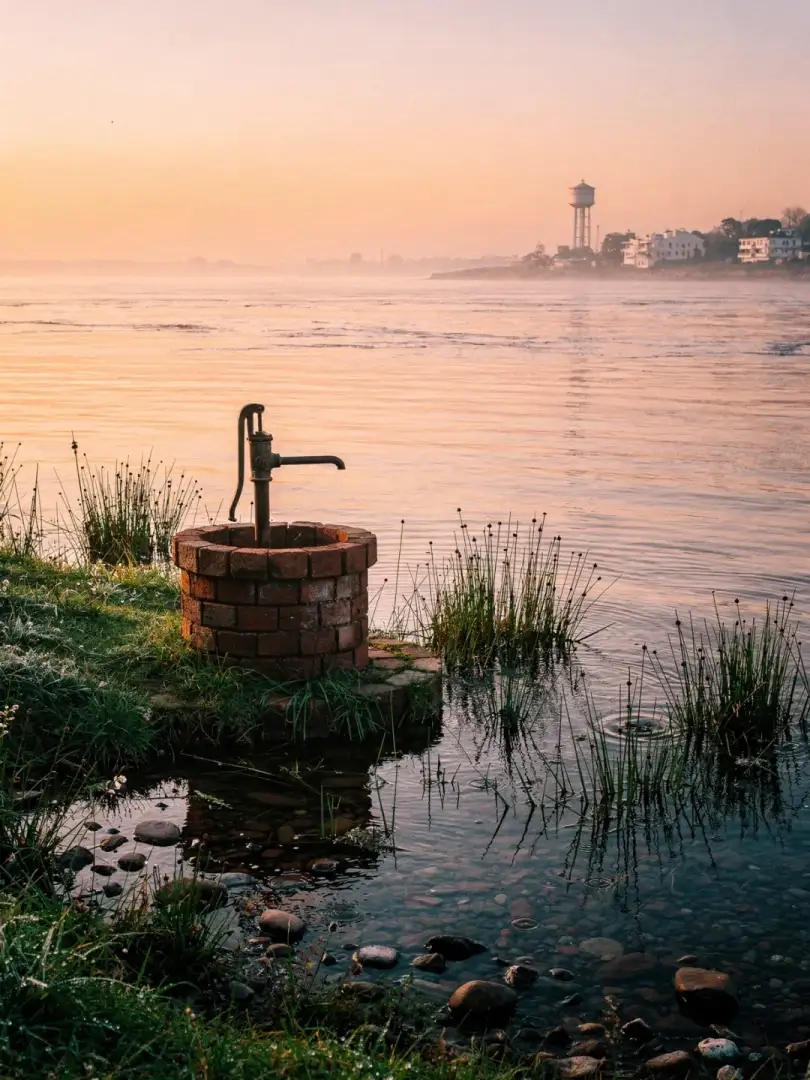
In front of Buenos Aires, the Río de la Plata is so wide you can barely see the opposite bank, and its water is brown with fine sediment. The capital's pipes draw heavily from this river, after treatment at the waterworks.
For brewing, this matters less than it sounds. Beneath the metropolitan area also lies the Puelche aquifer, from which many suburbs pump their water. Quilmes is considered a town with good water, and that's said to have played a role in choosing the location.
The surrounding landscape is the Pampa, an almost flat expanse of fine, fertile sediment. There are no mountains here into which one could carve rock cellars. The beer therefore doesn't mature in a mountain, but in stainless steel tanks that can be brought to the right temperature with refrigeration.
The climate is humid and hot in summer. Anyone wanting to make a pale, light beer therefore needs powerful cooling technology, both during fermentation and in storage. And the beer is delivered as cold as possible, because at twenty degrees Celsius, no one enjoys a lager in the height of summer.
Today almost all breweries treat their water anyway, with filters, softening, or salts. Whether a brewery stands in Palermo or in a suburb therefore affects the taste less than it once did. The city's brewing water is more of a raw material than a style-giver.