Pampa Barley
Malt & Grain
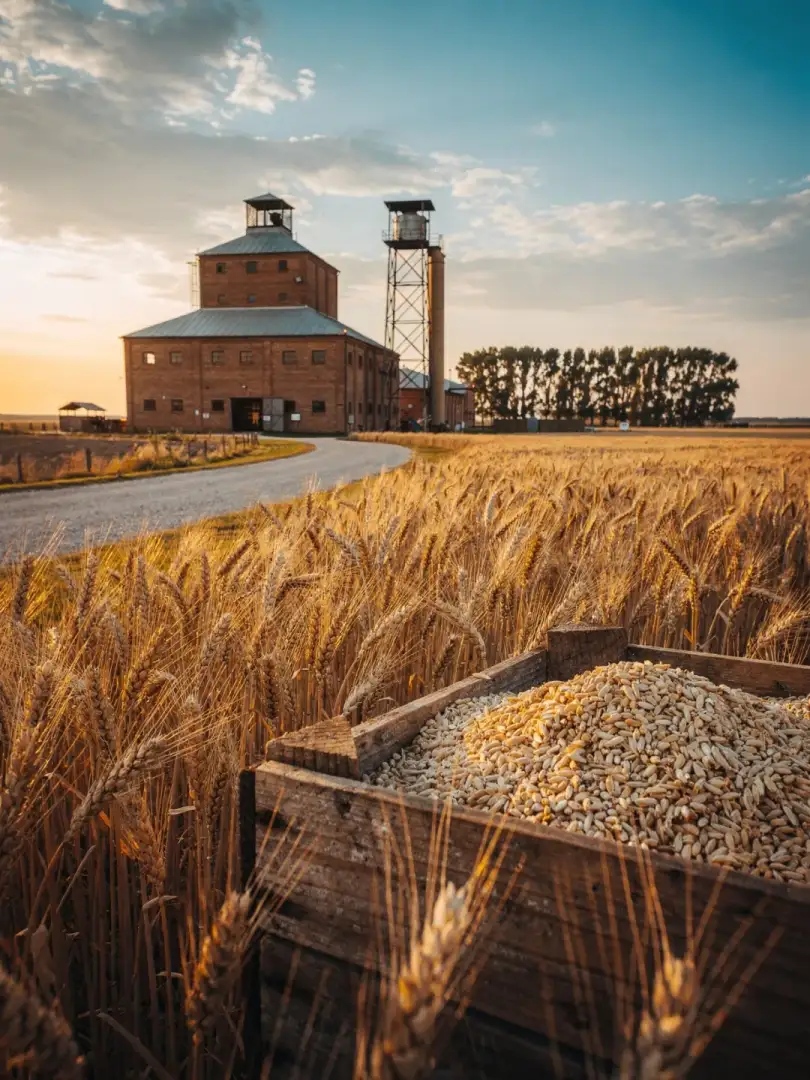
The Province of Buenos Aires is one of Argentina's great grain regions, and barley grows here across wide fields in the south of the province. This is an advantage for brewers, since malting barley doesn't have to travel far. How much of it ends up in the capital's brewhouses, however, depends on the year and the operation.
Barley only becomes malt once it's moistened and allowed to germinate. Afterward the maltster dries the grains on the kiln, a heated drying floor, which stops the growth. Quilmes carries the word right in its company name: Cervecería y Maltería Quilmes, brewery and malthouse under one roof.
A pale lager needs pale malt, kilned only lightly, which gives it notes of bread and grain. Many mass-market lagers around the world replace part of the malt with corn or rice, making the beer lighter and paler.
The small breweries of Palermo often work with a selection of specialty malts. Caramel malt brings sweetness and an amber hue, roasted malt the dark tones. Anyone brewing an American Pale Ale usually relies on pale base malt with a touch of caramel, so the hops have enough to balance against.
How much malt goes into a beer is shown by the original gravity, meaning the sugar content of the wort before fermentation, measured in degrees Plato. An International Pale Lager, according to the BJCP, falls between 10.5 and 12.4 degrees Plato, an American Pale Ale higher still. The more malt, the more sugar for the yeast, and the more alcohol in the finished beer.