Barley from the North
Malt & Grain
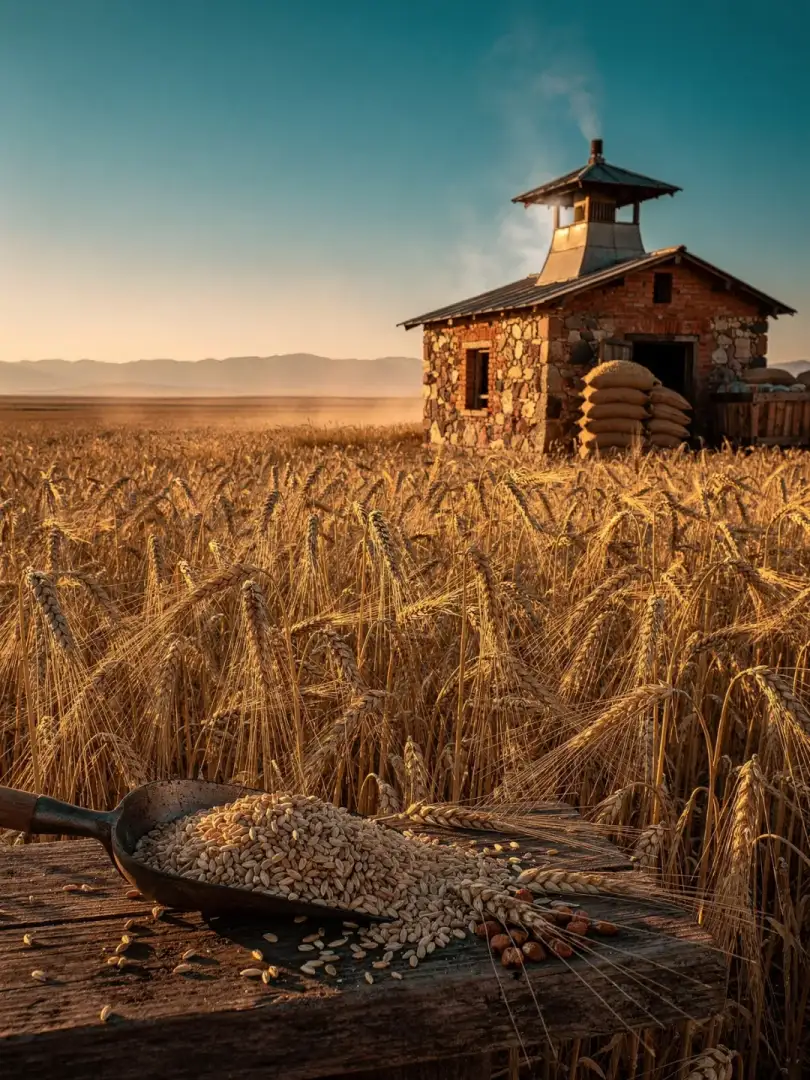
Barley in Argentina grows mainly in the Pampas further north, not at the foot of the Andes. The small breweries in the Comarca Andina and around El Bolsón therefore usually source their malt from outside the region. Breweries rarely disclose how much comes from which maltster.
Malt is barley that's been allowed to germinate briefly and then dried. During germination, the grain develops enzymes that later break down starch into fermentable sugar. The drying process is called kilning: the hotter and longer the kilning, the darker and more roasted the malt becomes. A pale malt gives beer body and a golden color.
A solid base malt forms the foundation for the region's flagship beers. Caramel malts are often added as well, heated again in the kiln after germination until the sugar in the grain caramelizes. These lend the beer color ranging from gold to copper, along with a light sweetness that balances the hops.
Brewers use dark roasted malts for stout and similar styles. Their aroma recalls coffee and dark chocolate, though barley malt remains the main ingredient even here.
In the end, malt in Patagonia serves mainly as a means to an end: it's meant to give the beer a backbone that carries the hops grown just down the valley. Order a Pale Ale in El Bolsón, and you're drinking a blend of barley from afar and hops from next door.