Meltwater from the Andes
Water & Soil
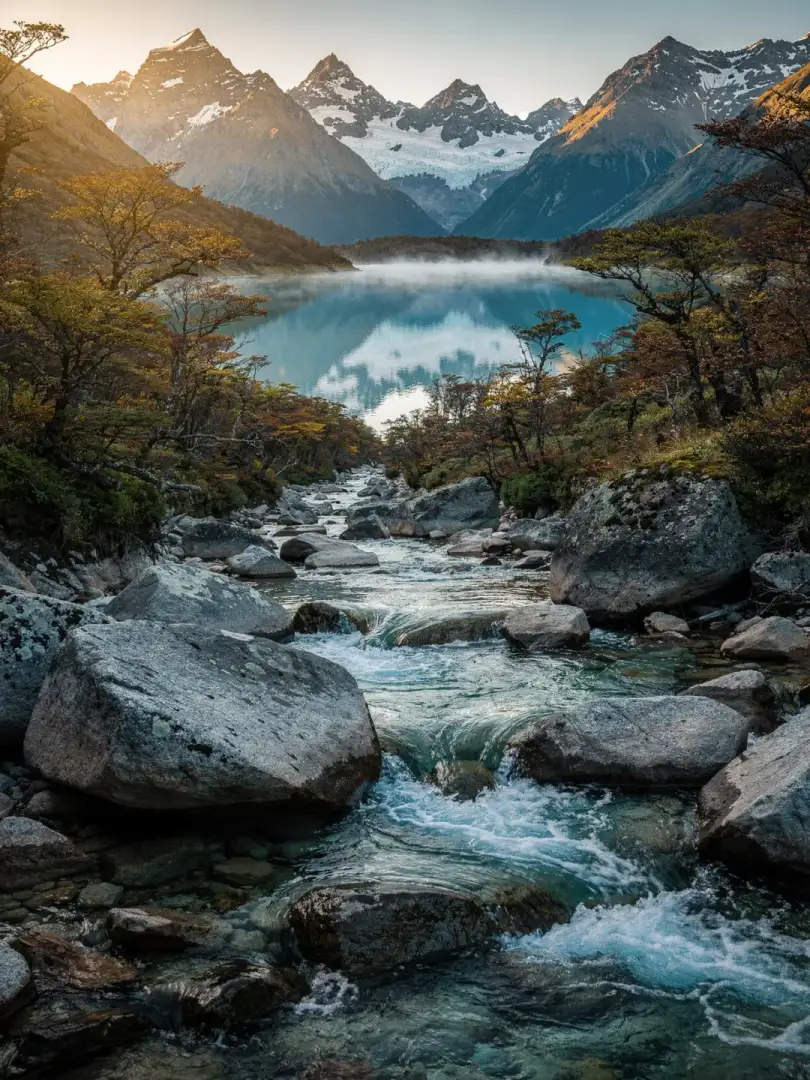
Brewing water in Patagonia begins as snow on the peaks of the Andes. In spring it melts and fills lakes like Nahuel Huapi near Bariloche. In El Bolsón, streams and rivers flow down from the slopes into the valley. Local brewers and tourism promoters praise this water as one reason behind their beers.
Meltwater from mountain rock usually contains only a small amount of dissolved minerals. That's an advantage for brewers, since soft water can be adjusted precisely to suit the style. Those wanting a pale beer with a crisp bitterness add just a little mineral salt, while for darker beers the mix can be changed. Exact hardness figures for the region can't be given without measurements from each individual brewery.
The landscape also shapes how brewing is timed. Patagonia lies in the Southern Hemisphere, so winter falls during our summer months, and temperatures in the mountains often drop below freezing. The hop fields in the El Bolsón valley sit sheltered between mountain ranges. Summers there are cool enough for hops, the nights fresh, and the days long.
Southern beech forest, the genus Nothofagus, grows around the lakes. It was in these forests that researchers collected the yeast mentioned in Station 5. The soil, made up of glacial debris and volcanic ash, is porous, and the water that seeps through it collects in springs and streams.
A brewer working in this region, then, draws on water with little salt, cool nights, and long summer days. Every style that eventually ends up in the glass starts with this remarkably pure base, even if measured values vary considerably from brewery to brewery.