Living Yeast, Cooling
Yeast & Fermentation
Why is the brewery called Little Creatures? The "little creatures" are the yeast cells. That's what the founders called the living yeast in their Pale Ale, which was originally simply called "Live." Yeast is a fungus that converts malt sugar into alcohol and carbon dioxide, and depending on the strain, the result is either an ale or a lager.
With ales, top-fermenting yeast does the work. It collects at the top during fermentation and thrives at around 18 to 22 degrees Celsius, which is an advantage in Western Australia since less cooling is required. After one to two weeks the beer is ready, then it matures briefly before being packaged into kegs, bottles, or cans.
Lager, on the other hand, requires bottom-fermenting yeast, which works at cooler temperatures, around eight to twelve degrees Celsius, and then lagers for weeks at near-freezing temperatures. In the hot summer, this costs energy, which is one of the reasons Pale Ale is so popular here. With Swan Lager, that cold character is in every sip.
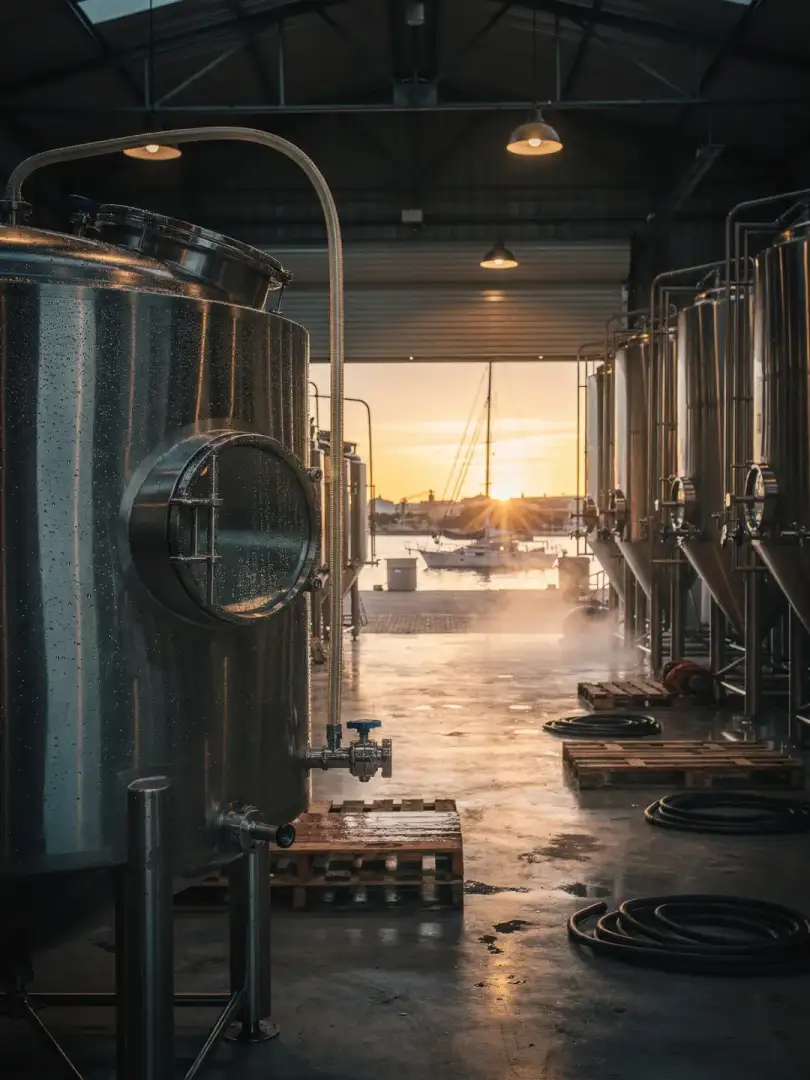
Feral's wheat beers and porters follow their own rules again, with yeasts that contribute fruit and spice. Stainless steel fermentation vessels are the norm; open vats are rare. There's a practical reason for this: stainless steel is easy to clean, and clean fermentation is half the battle for quality. Climb up to the roof of a brewery in Fremantle and you'll see gleaming tanks and pipes shining in the afternoon sun.